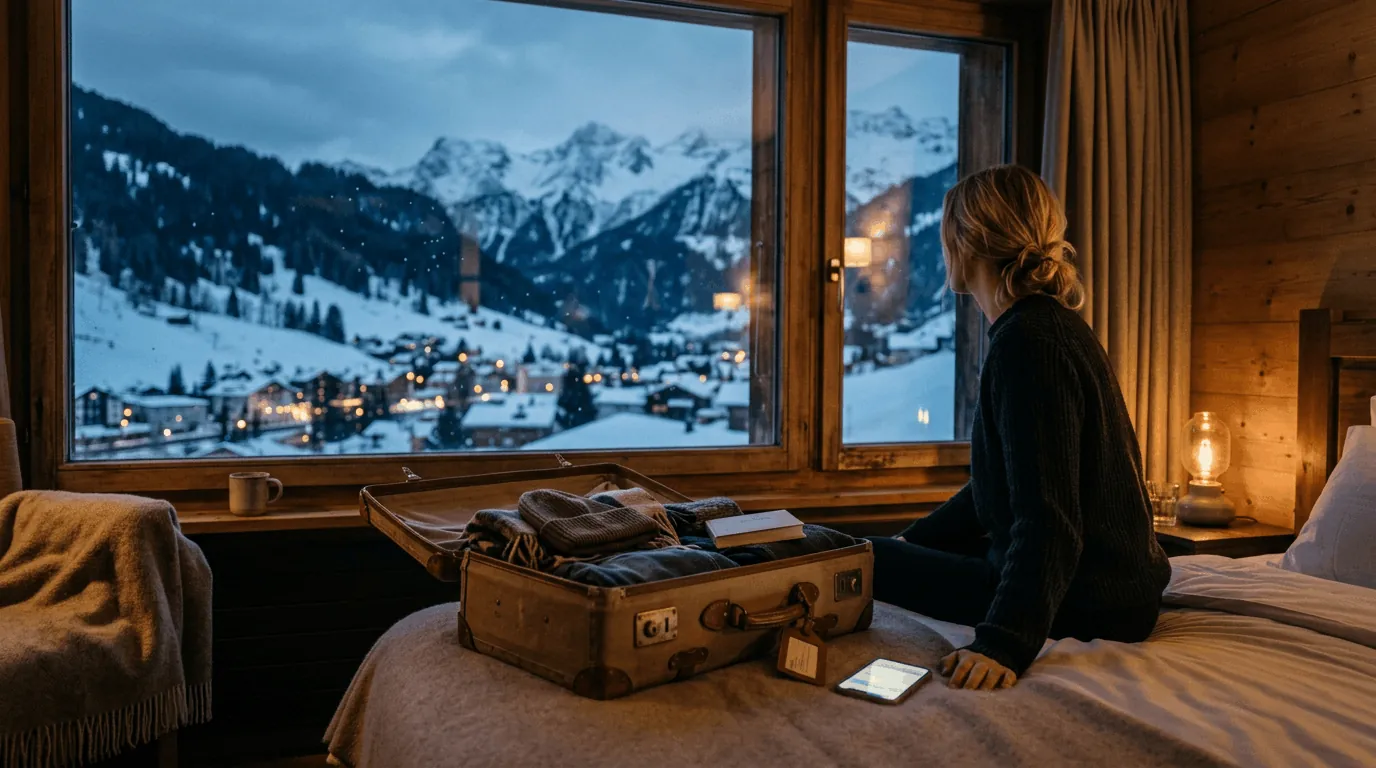
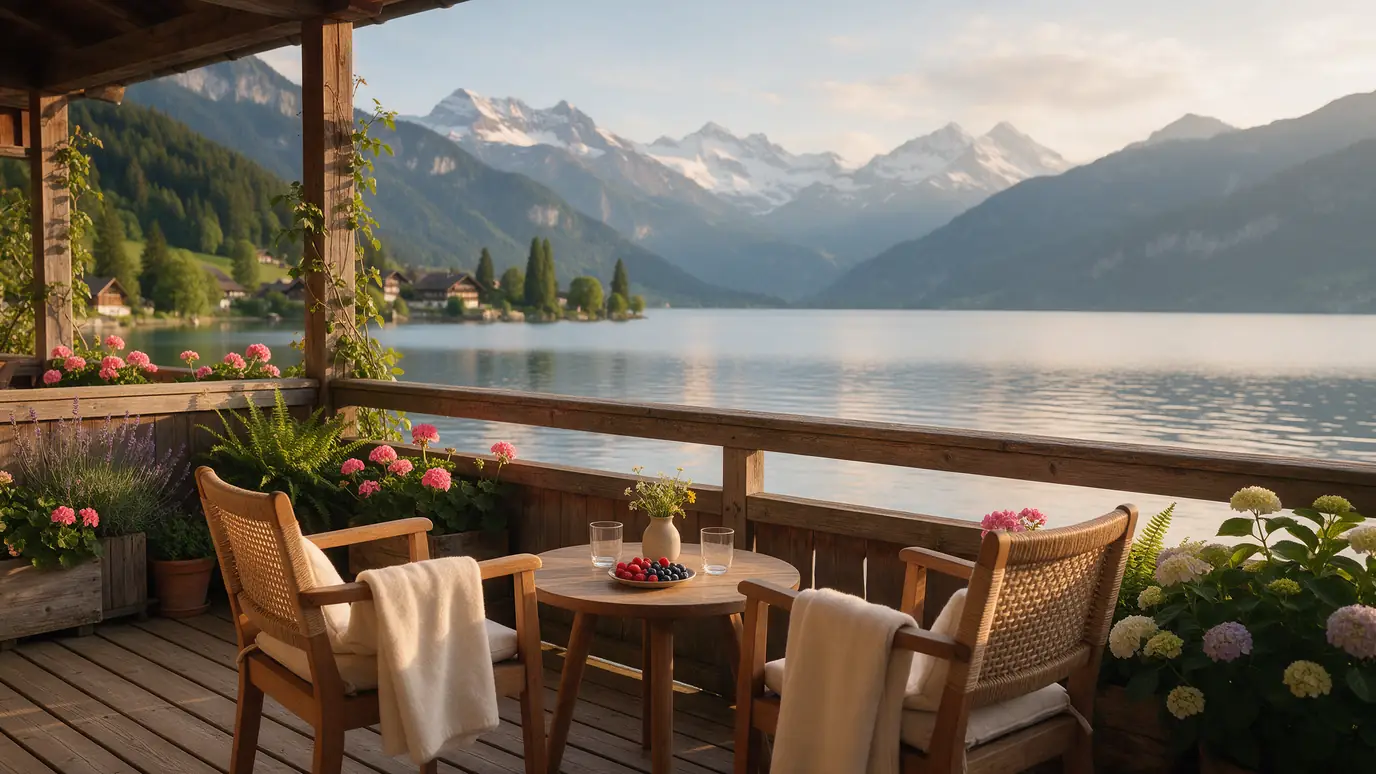
A guest stands at reception and shows a video on their phone: the terrace in the evening light, filmed by a friend who stayed there in summer. «That's exactly the room we want.» Many hoteliers know this scene. What's new is that there are now figures on it — and they show who actually leads guests to the hotel on social media.
On 8 October 2026, DERTOUR Suisse, which includes Kuoni and Hotelplan, published a representative survey by Marketagent. 1000 people from all language regions, age groups and genders gave information on how Instagram, TikTok and others influence their holiday planning. The short answer: strongly. The more interesting answer: the hotel itself is rarely the most important voice in this.
The problem in everyday hotel life
In many properties, social media runs on the side. Someone at reception or in management posts when time allows: the new menu, the freshly renovated lobby, a sunset. If measured at all, it's by likes and followers. The question of how a post turns into a booking usually remains unanswered.
At the same time, much of the content about the hotel is not created by the hotel at all. Guests film their room, post the breakfast, tag the location. These posts reach people who trust the sender — and that is often exactly where the decision falls on whether a property even makes it onto the list.
The current figures: who inspires on social media
96 percent of those surveyed use social media at least to some extent. Of these users, 66 percent have already been inspired there for a travel destination. The difference by age is large: 89 percent for Generation Z (born 1994 to 2010), 78 percent for Millennials, 49 percent for Generation X and 34 percent for Baby Boomers.
It is revealing to see who the inspiration comes from:
- Posts from friends, family or acquaintances: 50 percent
- Hotels, airlines and destinations: 35 percent
- Travel influencers: around 30 percent
- Tour operators, travel agencies and booking platforms: around 30 percent
Among Generation Z, influencers are at 52 percent, almost level with their personal circle (55 percent). Among Baby Boomers, they play hardly any role at 7 percent.
The type of content is also clearly distributed. The strongest inspiration comes from insider tips and lesser-known places (47 percent), images and impressions of a destination (46 percent), and practical tips on hotels, restaurants or activities (43 percent). Only 31 percent mention discounts and special offers.
And the inspiration does not remain without consequence. Among those who were inspired to travel on social media, 54 percent say that social media has already influenced the choice of an activity or attraction. 51 percent were influenced in their choice of destination, 43 percent in their choice of accommodation.
For context: the Reisestudie 2026 by Allianz Partners Schweiz from 9 September asks more broadly about sources of inspiration and information for travel. There, 21 percent name social media. Ahead are family and friends (42 percent), online travel platforms (41 percent) and web search (38 percent). Travel providers directly, such as a hotel or an airline, come to 16 percent. Both studies show the same pattern: the personal circle leads, the provider itself follows by a clear margin.
What does this mean for your hotel?
1. Turn guests into senders
If half of the inspiration comes from friends and acquaintances, your guests are your most important channel. This can be encouraged without becoming intrusive: a spot in the property that photographs well, a clearly visible note about the hotel account and the location to tag, a friendly sentence at check-out. Sharing guest posts with consent also shows that you see them.
2. Post insider tips instead of discounts
The figures are clear: insider tips and practical hints inspire far more than special offers. Your team knows the hike that isn't in the brochure, the restaurant where locals eat, the best hour for the viewpoint. This creates posts that get saved and forwarded — and that show your property as part of the destination, not just as a bed.
3. Plan for the target group you actually have
The differences by age are too large to ignore. Those who mainly welcome guests over 60 gain little from influencer collaborations — here, recommendations from one's circle and good reviews work better. Those who want to address younger guests will find a lever in a suitable collaboration with travel creators that barely exists with older guests.
4. Keep the path from feed to booking short
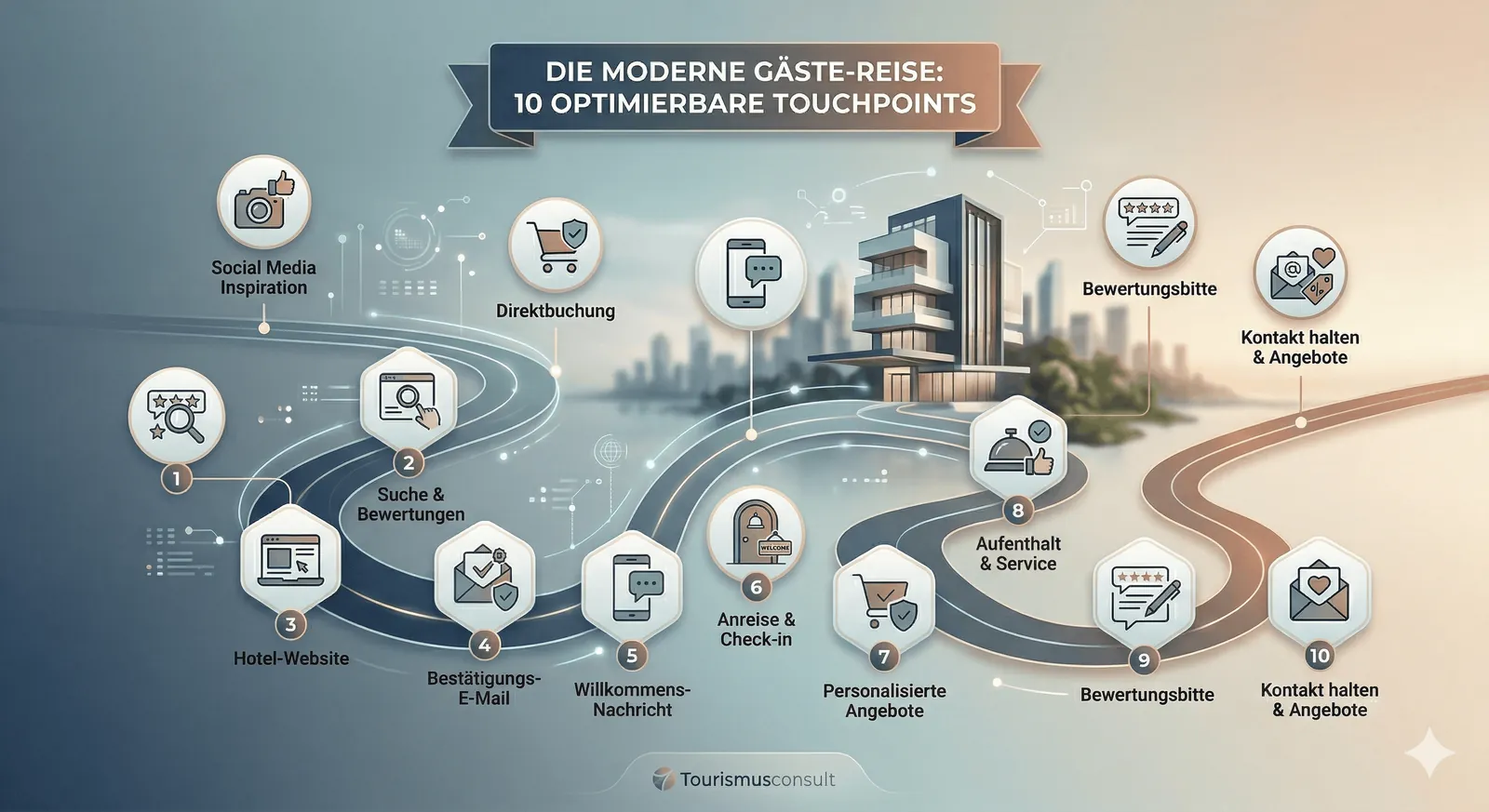
Inspiration is of no use if the next step gets stuck. Someone who has seen your room on Instagram lands on your profile and then on your website — usually on their phone. Check this path yourself: does the link in your profile lead directly to the relevant offer? Can booking be done in a few steps on a phone? Otherwise, the inspired guest will book via the platform they already know.
5. Don't overdo the hype
Trends work in both directions. If a destination is strongly trending, interest rises among 45 percent of social media users — and falls among 28 percent. For a hotel, this means: authenticity beats staging. Images that match what the stay actually offers protect against disappointed guests and bad reviews.
Common mistakes
- Using social media as advertising space for discounts, even though insider tips and impressions work considerably better
- Only looking at your own posts and overlooking guest posts
- Booking an influencer collaboration without checking whether their audience matches your own guest structure
- Counting likes and followers but not checking how many visitors come from social media to the booking page
- Setting the link in the profile to the homepage instead of a specific offer
Conclusion
Social media has become a travel guide for Swiss travellers, especially for younger ones. But guests are more likely to be inspired there by friends and acquaintances than by the hotel itself. For hotels, this means: less advertising, more reason to share. Those who give their guests good motifs, show insider tips instead of discounts, and keep the path to booking short will become visible where the travel idea is born. If you'd like to know what this looks like for your property, talk to us: +41 52 566 10 19.
Sources
- DERTOUR Suisse, 08.10.2026: Social media made me book it – how Instagram, TikTok & co. influence the holiday planning of Swiss people (survey by Marketagent, 1000 people)
- Allianz Partners Schweiz, 09.09.2026: Reisestudie – booking and travel behaviour of the Swiss travel population 2026 (inspiration and information)
- travelnews.ch, 11.10.2026: Social media is increasingly influencing travel planning
More relevant articles
- Likes lie (which social media metrics really count for hotels)
- User reviews of activities (how guests shape a region's visibility)
- AI in social advertising (when paid reach comes into play)