If you still time your summer or winter season campaign by last year's gut feeling, you are giving away budget. Current global booking data shows: guests today decide considerably more short-term than three years ago – while researching longer and more intensively before booking. For hotels, this means the right moment for a campaign is shifting, and if you ignore this shift, you reach guests at the wrong time.
The problem in everyday hotel business
Many hotels plan their seasonal campaigns on a fixed calendar: winter campaign in October, summer campaign in March. That made sense for a long time, because guests booked correspondingly early. Today, guests still research early and extensively, but the actual booking decision keeps shifting closer to the arrival date. If you rely only on the "classic" lead time, you miss a growing share of demand – the guests who book short-term, but well informed.
Current findings from a study / event
The current global booking data report from Lighthouse (an analysis of billions of search and booking data points between 2023 and 2025) shows a clear trend that has held over several years:
- The lead time for hotel bookings is falling noticeably. Worldwide, the share of search queries within 28 days before arrival rose from the beginning of 2023 to the end of 2025 by 9 percentage points, to 38 percent of all search queries.
- At the same time, average length of stay is falling. The share of one-night stays in search queries rose worldwide by 9 percentage points over the same period, while longer stays (8–14 nights) declined slightly.
- Europe shows one of the strongest shifts in lead times. Short-term search queries (within 28 days) rose particularly sharply in Europe – a sign that European guests, too, are increasingly deciding spontaneously.
- Despite shorter lead times, overall search volume is rising. So guests are not researching less, but longer and more intensively – they just make the final booking decision later.
- AI-supported research is accelerating this trend. A growing share of travellers use AI tools to research accommodation, enabling faster, later booking decisions made with more confidence.
- Demographic changes are reinforcing the effect. More childless households and a growing number of travel-eager retirees are creating more flexibility in trip planning – classic holiday periods are losing importance.
What does this mean for your hotel?
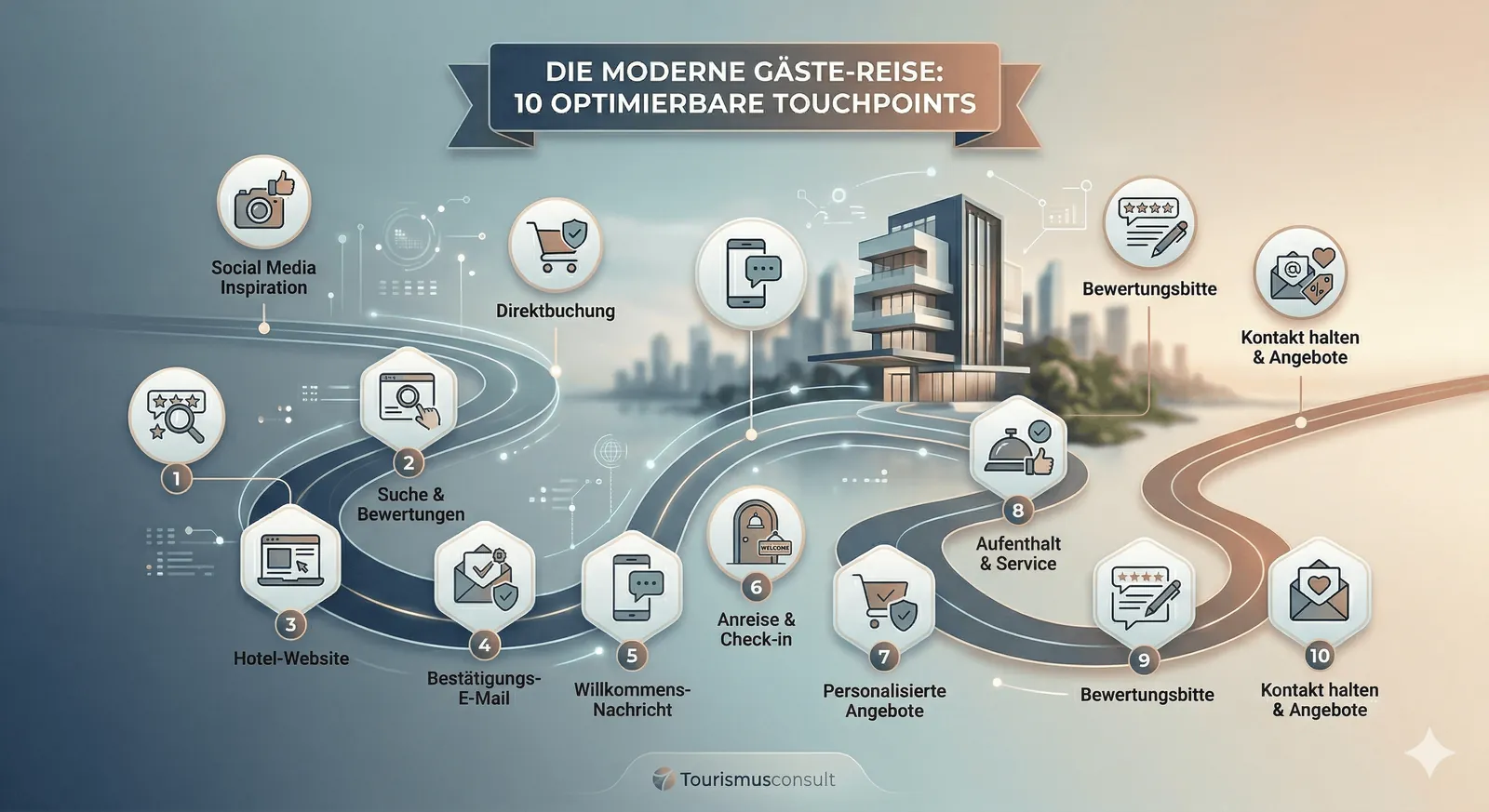
1. Think of campaigns in two stages: inspiration early, booking incentive late
Plan your visibility for the inspiration phase considerably earlier than before – for example through content, social media and your Google Business Profile. Set the actual booking incentive (offers, availability notices, price alerts) deliberately closer to the season, when the short-term decision is made.
2. Make available capacity visible in a targeted way
Your booking engine already shows prices and availability in real time – but that is not enough if this information is not actively promoted anywhere. Highlight short-term available rooms specifically on your homepage, in newsletters or in social media ads, so that late-deciding guests can actually find them.
3. Actively promote one-night and short stays
Since short stays are increasing worldwide, it is worth developing dedicated offers for one to two nights – for example for weekend trips or spontaneous short getaways – instead of relying only on classic week-long packages.
Concrete practical example
Starting point: A fictional holiday hotel in a mountain village in Graubünden had always launched its winter campaign in September and rarely adjusted it afterwards. In the last two seasons, rooms in the final four weeks before Christmas were regularly under-occupied, even though the website recorded significantly more visitors during this period.
Action taken: The hotel supplemented its early inspiration campaign with a second, short-term campaign wave that only started four weeks before the respective target date – focused on spontaneous short stays and actively promoted available capacity from the booking engine.
Result / expectation: Occupancy during the short-term booking phase is expected to increase noticeably, because the hotel remains visible exactly in the window where a growing share of guests make their actual booking decision.
Common mistakes
- Planning campaigns only once per season – without a second, short-term wave for late-deciding guests.
- Not actively promoting available capacity from the booking engine – prices may be correct in real time, but short-term available rooms are not specifically highlighted in campaigns or on the homepage.
- Relying only on long stays – while demand for short, spontaneous stays is growing.
Conclusion
The days when a single seasonal campaign per year was enough are over. Guests today research longer, but decide later – and this shift affects practically every travel market, including Switzerland. If you adapt your campaign planning to this new reality, you miss less short-term demand and use your marketing budget more precisely. The key takeaway: check when your guests actually book – not when you are used to advertising.
Sources
- Lighthouse: "Hotel booking trends 2026: Are shorter stays and last-minute searches the new normal?", 23 March 2026: https://www.mylighthouse.com/de/resources/blog/hotel-booking-trends
- Criteo: Winter 2025 Travel Pulse (cited in the Lighthouse report above)
- Klook: Travel Pulse 2026 (cited in the Lighthouse report above)
More related articles:
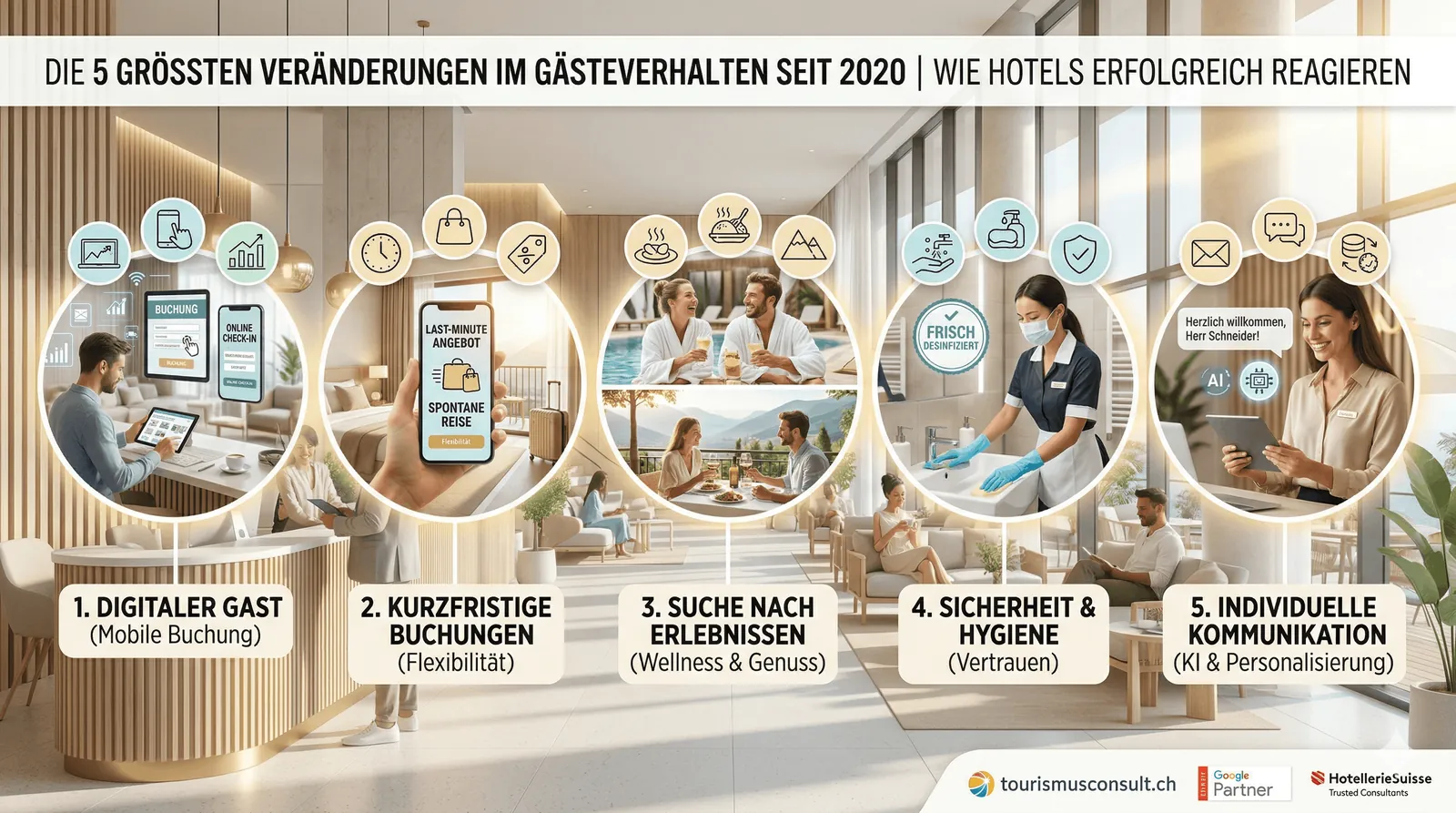
- The 5 biggest changes in guest behaviour since 2020 (the basis for changed booking behaviour)
- The winners in hotel marketing build systems, not individual measures (campaign planning as part of a system)
- Metasearch 2026: Is Google Hotel Ads still worth it? (a related campaign topic)