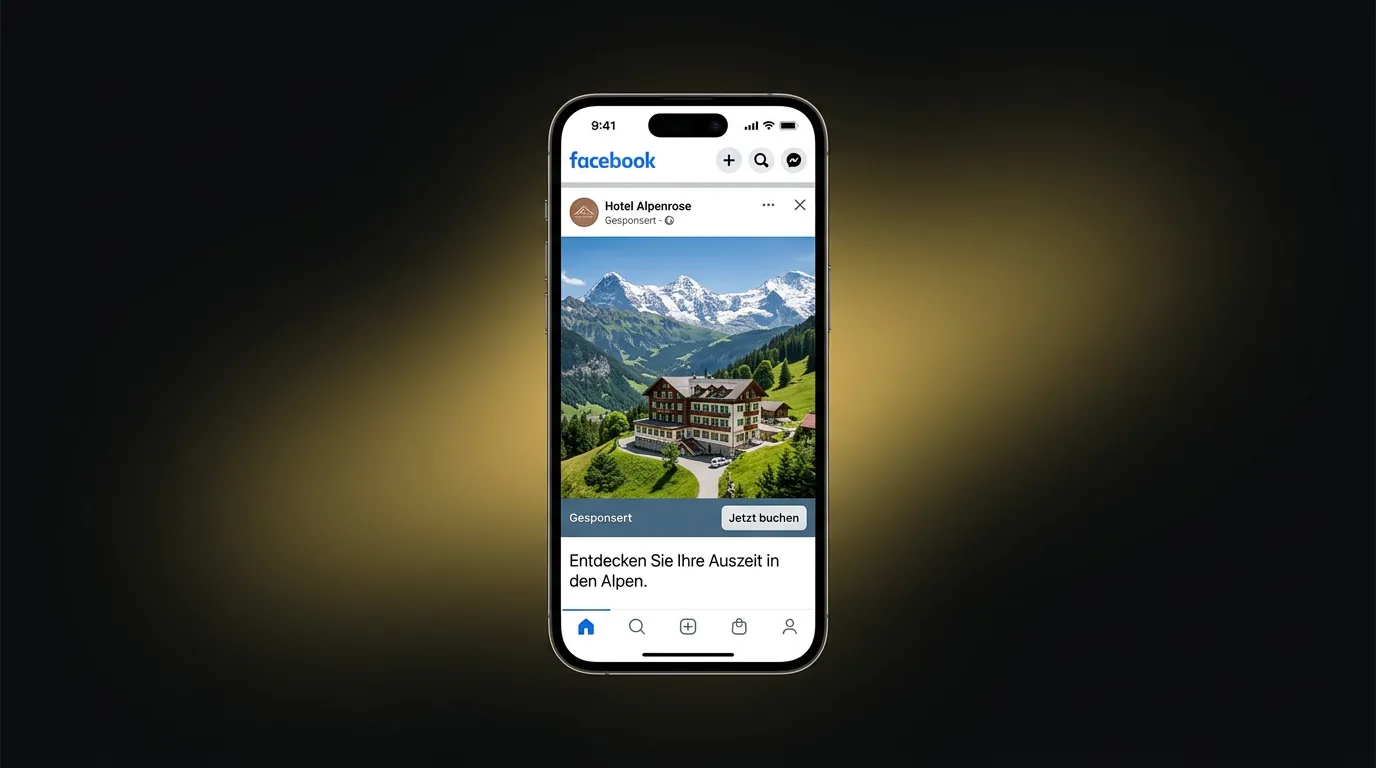
Meta, Instagram and Co. are taking over more and more tasks that marketing teams used to handle by hand: finding audiences, delivering ads, distributing budgets. For hotels, this sounds like relief — and it is. Only the work shifts to a different place: the images, videos and texts that your ad actually shows. Anyone who ignores this gives away reach that could easily be secured with good creative material.
The problem in everyday hotel practice
Many hotels still put their energy where it mattered in 2022: as precise targeting as possible, many audience variants, complex ad groups. The problem: platforms today recognise suitable guests themselves, usually more reliably than any manual setting. What often gets neglected instead are the ads themselves — the same two or three photos from the image gallery that have been running for months. The result: the campaign runs technically clean but still brings too few enquiries and bookings.
Current findings from research and practice
A recent guest article on OnlineMarketing.de sums up the development and matches data from the advertising market:
- Targeting is losing weight. Platforms like Meta increasingly identify suitable users themselves through automated formats. Finely tuned audience settings therefore bring less and less additional effect.
- Creatives decide attention. The image, video, text and message of an ad now determine more strongly than before whether someone even looks and clicks.
- Testing replaces gut feeling. Successful campaigns work with clear assumptions ("Does the audience respond more strongly to an authentic photo than to a staged advertising image?") and check them against real figures such as click rate or cost per result.
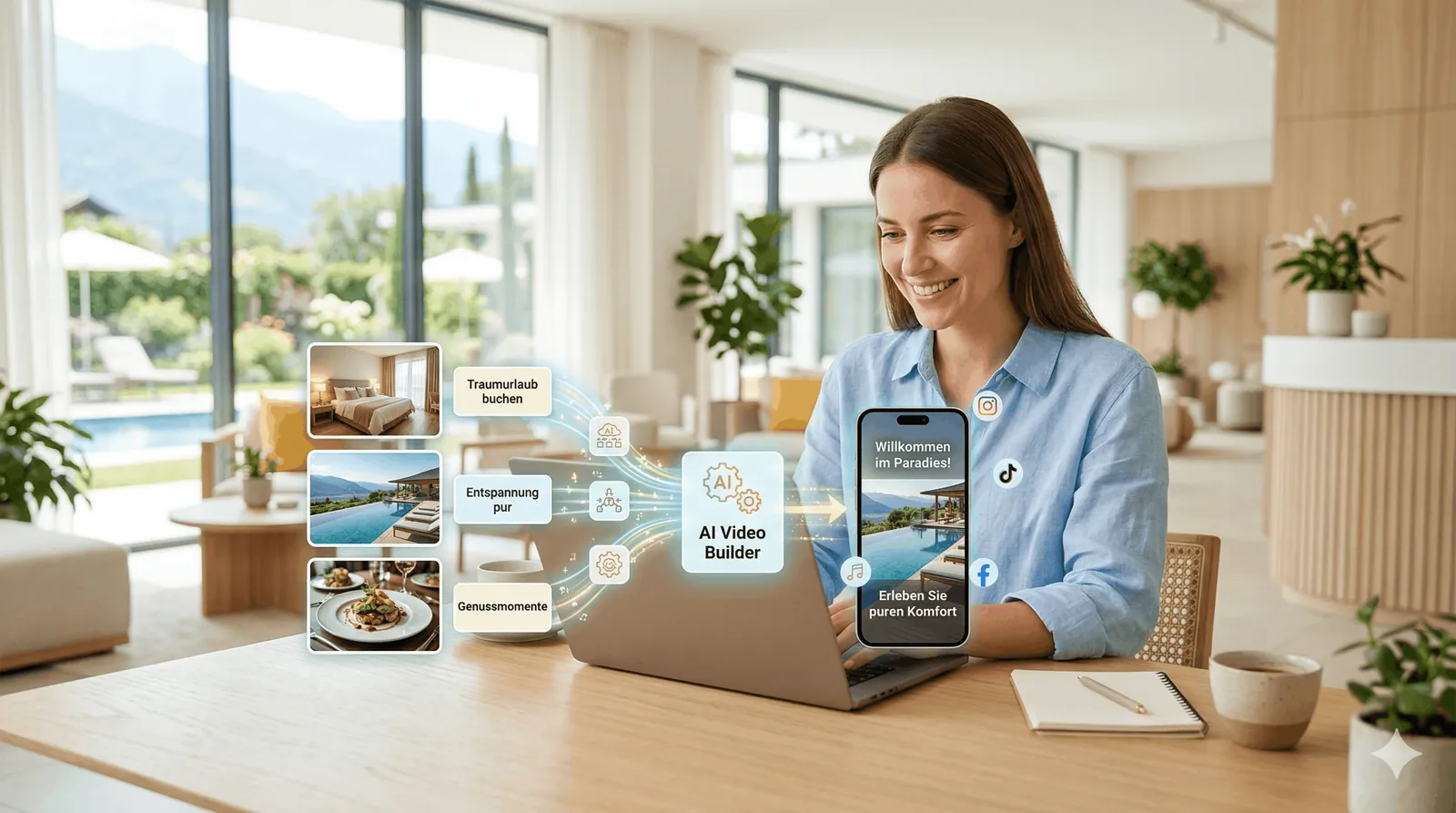
- AI speeds up production, not strategy. Generative tools help create more image and text variants faster. Which message should be tested in the first place remains a decision made by people.
- Automated campaigns reward good signals. Meta's own analyses show that Advantage+ campaigns achieve noticeably higher advertising success on average than manually controlled campaigns — provided enough varied image and video material is available.
- Hotel example from practice: The Jumeirah hotel group was able to increase its return on ad spend by 109 percent and reduce the cost per click by 59 percent through AI-supported budget control and automation — through better signals and testing, not through more manual intervention.
What does this mean for your hotel?
1. Image material is your most important marketing budget
Invest first in real, varied image and video material — rooms, guests in everyday situations, breakfast, the view. Five to ten different motifs give the AI enough choice to deliver the right motif to every viewer.
2. Work with hypotheses instead of repetition
Before every campaign, formulate two to three concrete assumptions: Does a video attract more enquiries than a photo? Does a short message work better than a detailed text? Check these assumptions against the campaign data — not by feeling.
3. Always have a person proofread AI content
AI-generated images and texts often look convincing but occasionally contain small errors — an incorrect number of rooms, an unsuitable detail in the image. A quick check before publication protects your hotel's credibility.
Practical example: a boutique hotel on Lake Lucerne
Starting point: A boutique hotel with 24 rooms had been running the same three advertising photos on Instagram and Facebook for years. The click rate had been declining for months, while the budget stayed the same.
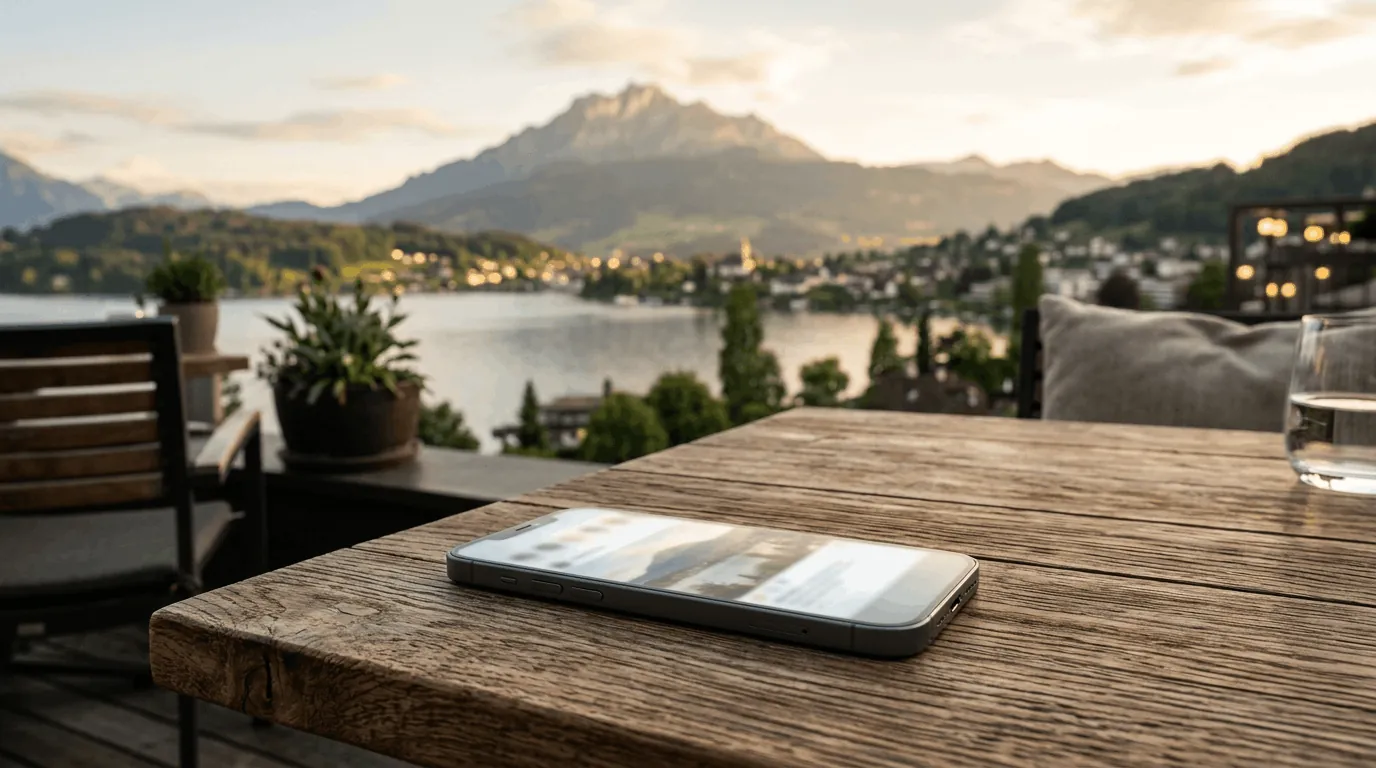
Measures: The hotel expanded its image material to twelve motifs — including short mobile-phone videos of the breakfast buffet and the lake view from the terrace. In addition, the team tested three hypotheses: authentic photo versus staged advertising image, short text versus detailed description, video versus still image. An AI tool handled the generative creation of text variants, while selection and approval stayed with the hotel team.
Result (expected): After four weeks, a clear trend emerged: the short mobile videos with the lake view achieved a significantly higher click rate than the professional studio photos, with lower costs per enquiry at the same time. The hotel plans to further increase the share of authentic video material in upcoming campaigns.
Note: This example is fictional and is intended for illustration.
Common mistakes
- Always using the same two or three images. Without variety, the AI has too little material to find the right motif for different guests.
- Starting campaigns without a clear hypothesis. Without a concrete assumption, nothing can later be learned from the results.
- Publishing AI content unchecked. Small errors in image or text quickly look unprofessional and damage trust in the brand.
Conclusion
Automation at Meta and Co. takes a great deal of operational work off hotels' hands — but it shifts the real decision to where people should make it: the question of which images, messages and stories your hotel wants to tell. Anyone who regularly produces new, real image material and tests it with clear hypotheses gives the AI the foundation to deliver truly good results. A good occasion to take a closer look at your own ad account: how many different motifs are actually running there right now?
Sources
- Bockhorni, Markus: KI im Social Advertising: Warum Creatives und Strategie wichtiger werden, OnlineMarketing.de, 22.07.2026
- Smartly.io: Jumeirah transforms hotel advertising by using AI and automation to achieve a 109% ROAS boost
- Optimyzee: The Complete Guide to AI-Powered Campaigns in 2026
Further related articles:
- Hotel-Videos mit KI (practical implementation of AI creatives)
- Meta Ads für Hotels: Was sich 2026 fundamental verändert hat (broader Meta context)
- Likes lügen: Warum Hotels ihre Social-Media-KPIs neu denken müssen (measuring creative success)
- KI-Inhalte kennzeichnen (legal aspect of AI creatives)