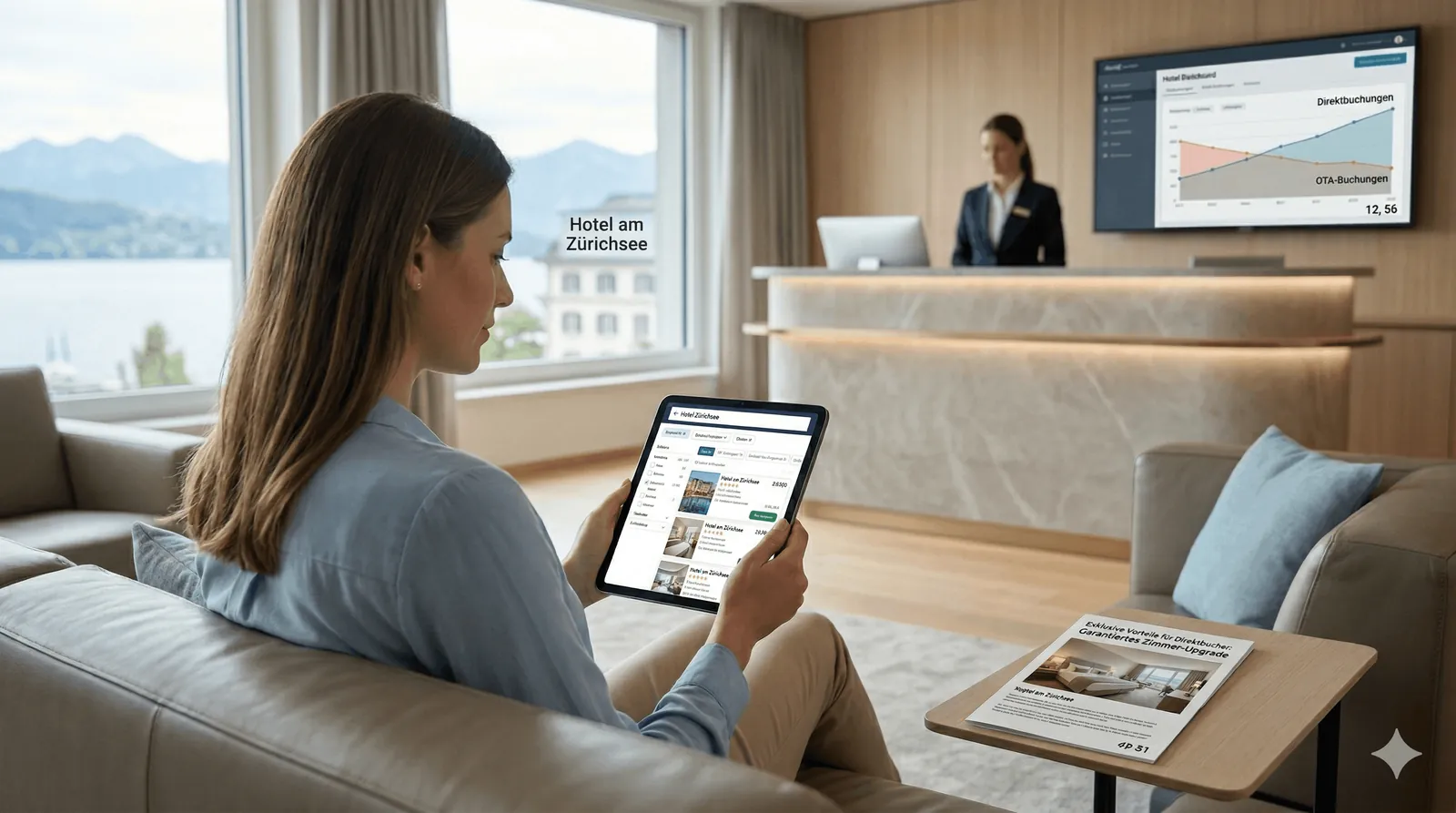
Imagine your potential guest no longer searches Google for their next weekend trip, but starts their research directly on a booking platform. What sounds like a nightmare scenario to many hoteliers has, according to the latest data, become reality.
A current, worldwide study by technology provider SiteMinder (March 2026), involving almost 12,000 travellers from 14 countries, delivers a historic figure: for the first time, more travellers (26 percent) start their hotel search on platforms such as Booking.com than on classic search engines like Google (21 percent).
For hoteliers, this means that the guest's path to your hotel is changing fundamentally. Anyone who fails to adapt their marketing strategy now is leaving not only visibility but also a large share of their profit to the big online travel agencies (OTAs).
The key findings on booking behaviour in 2026
The figures speak a clear language and show that guests' research habits have shifted massively:
OTAs as the new search engines: The days when guests searched Google for "hotel Zürichsee" are changing. Over a quarter of travellers now use booking platforms as their primary research tool. They value being able to compare prices, availability and reviews instantly in one place.
The trend towards the premium segment: Travellers are increasingly willing to spend more for quality. A remarkable 58 percent of guests now opt for superior or luxury rooms instead of the standard category. The experience is moving further into the foreground than ever before.
The return of recommendations: Personal recommendations (word of mouth) have doubled as a starting point for trip planning, reaching 14 percent. Travellers increasingly trust the experiences of friends or travel content on social media.
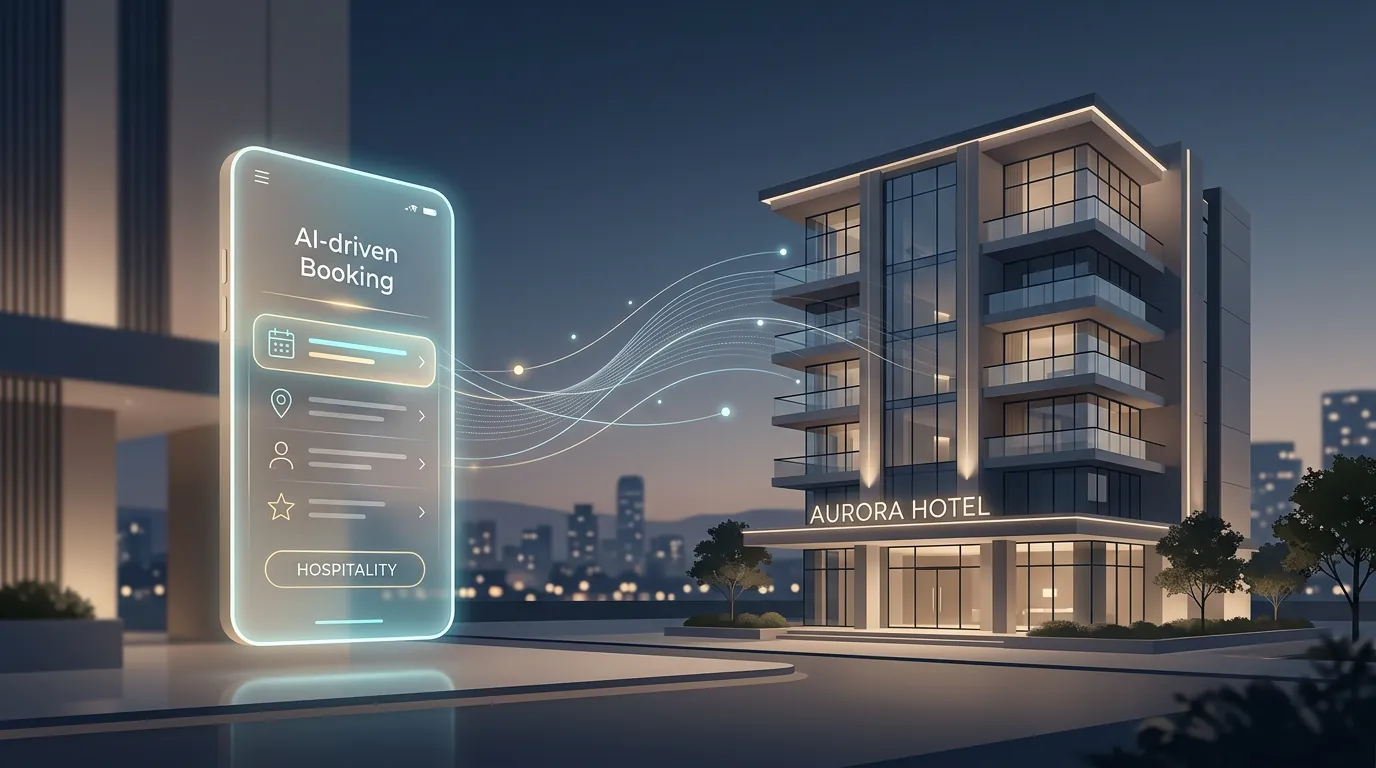
AI as the new travel advisor: Artificial intelligence has also arrived in the mainstream. Already 30 percent of travellers use AI tools for inspiration on routes or hotel recommendations. Current data from TrustYou also shows that 71 percent of AI-generated hotel recommendations are significantly influenced by guest reviews.
The OTA trap: why direct bookings matter more than ever
This shift towards OTAs comes at a high price. When hotels rely on platforms such as Booking.com or Expedia for more than half of their bookings, these platforms often take a commission of 15 to 25 percent per booking. With an annual revenue of two million francs and a 70 percent OTA dependency at 18 percent commission, more than 250,000 francs quickly flow out to third parties.
By contrast, the acquisition cost for a direct booking (via your own website, newsletter or targeted Google advertising) is typically only 4 to 8 percent.
It is also true that whoever books via an OTA belongs to the OTA. The platform keeps the guest's real email address. As a hotelier, you cannot send targeted pre-arrival offers for the restaurant or contact the guest after departure about a return stay.
3 conclusions for your hotel marketing
What do these figures mean in concrete terms for marketing your hotel? Here are three key takeaways for your strategy to remain successful despite OTA dominance:
1. Use OTAs as a showcase, not a final destination
Since 26 percent of travellers start their search on Booking.com and similar platforms, you need to shine there. Ensure excellent, up-to-date photos, complete room descriptions and error-free amenity listings. The goal is the so-called "billboard effect": the guest finds you on the OTA, but then switches to your own website to learn more. In fact, 18 percent of travellers who start their search on an OTA end up booking directly with the hotel — and the trend is rising. Make it as easy and attractive as possible for these guests to book directly on your website.
2. Take care of your reviews like your hotel entrance
Since both human travellers and AI search engines (such as ChatGPT, Gemini or Perplexity) rely heavily on online reviews for their recommendations, your reputation management is decisive. According to TripAdvisor, 77 percent of travellers are more likely to book a hotel if management responds to reviews. Respond professionally to feedback — whether positive or negative. Modern AI tools can support you in formulating responses more efficiently, but the personal touch remains essential.
3. Create incentives for the premium experience
If 58 percent of guests already prefer higher-value rooms, you should make active use of this. Offer exclusive packages on your own website that are not available on the OTAs. This could be a guaranteed room upgrade, a welcome drink, free parking or a more flexible check-out. Show the guest clearly: "Those who book directly with us get the best experience."
Conclusion: the search for your hotel has changed
The days when a simple website and a good Google ranking were enough to attract guests are over. Today, guests start their search on booking platforms or are inspired by AI. Use these channels as your digital business card, but guide the guest towards a direct booking with a strong website of your own and clear advantages. Every percentage point you shift from OTAs to direct bookings is pure profit for your hotel.
Sources:
https://www.siteminder.com/r/latest-trends-in-hotel-industry/ "SiteMinder (2026). SiteMinder's Changing Traveller Report 2026. Retrieved from:"
https://www.hotelspeak.com/2026/03/lighthouse-launches-review-agent-to-help-independent-hotels-boost-ota-rankings-and-bookings-as-ai-search-reshapes-travel-discovery/ "Hotel Speak (2026). Lighthouse launches Review Agent to help independent hotels boost OTA rankings and bookings as AI search reshapes travel discovery. Retrieved from:"
https://resaco.fi/en/blog-boutique-hotel-marketing-outsmart-chains-otas/ "Resaco (2026). Boutique Hotel Marketing in 2026: Outsmarting Chains and OTAs."
More related articles
- Metasearch 2026: Is Google Hotel Ads still worth it? (related OTA/Google topic)
- Google becomes a booking agent (Google's counter-move)
- Why your hotel website is your most important sales tool in 2026 (direct booking as the answer to OTA dominance)