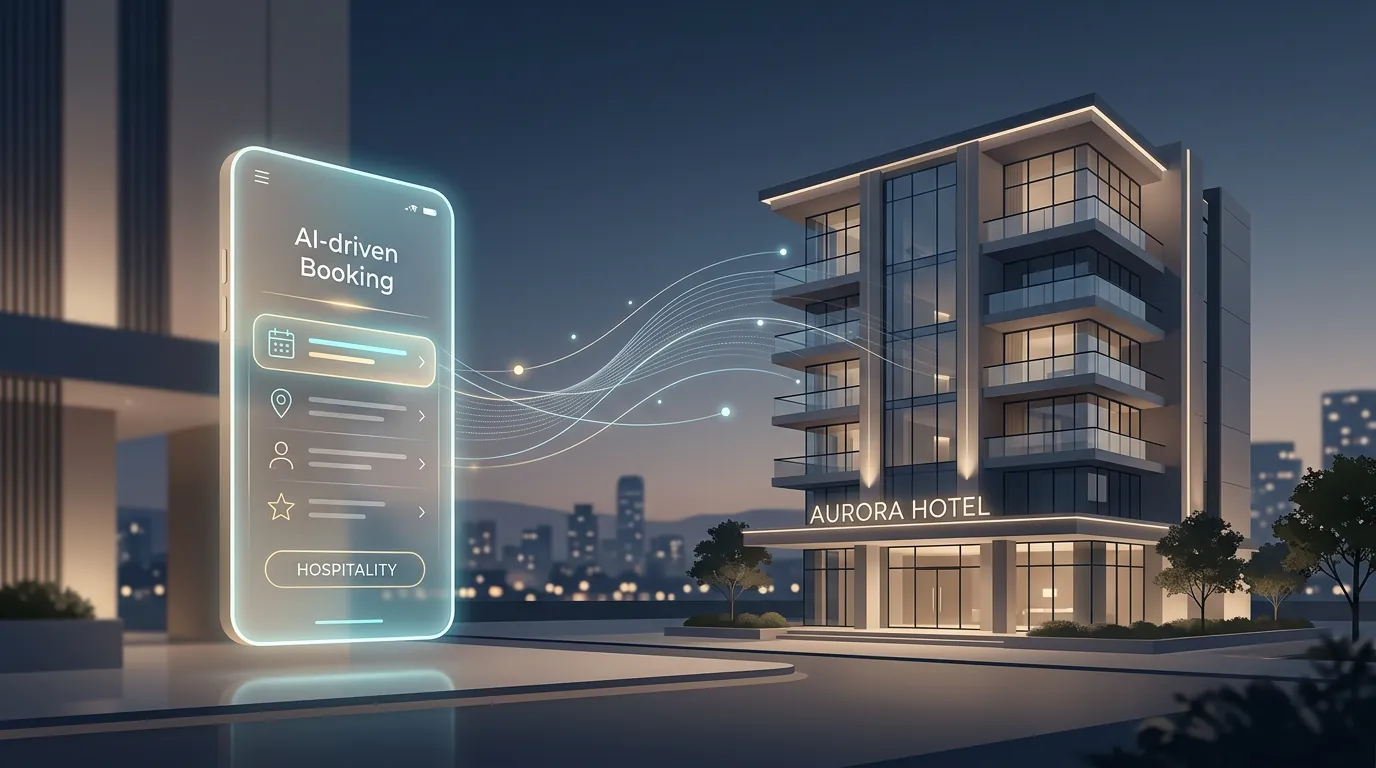
The online travel industry is facing a massive upheaval. At the last quarterly earnings announcement, Marriott CEO Anthony Capuano dropped a real bombshell: the world's largest hotel chain is working on a direct integration into Google's new AI Mode.
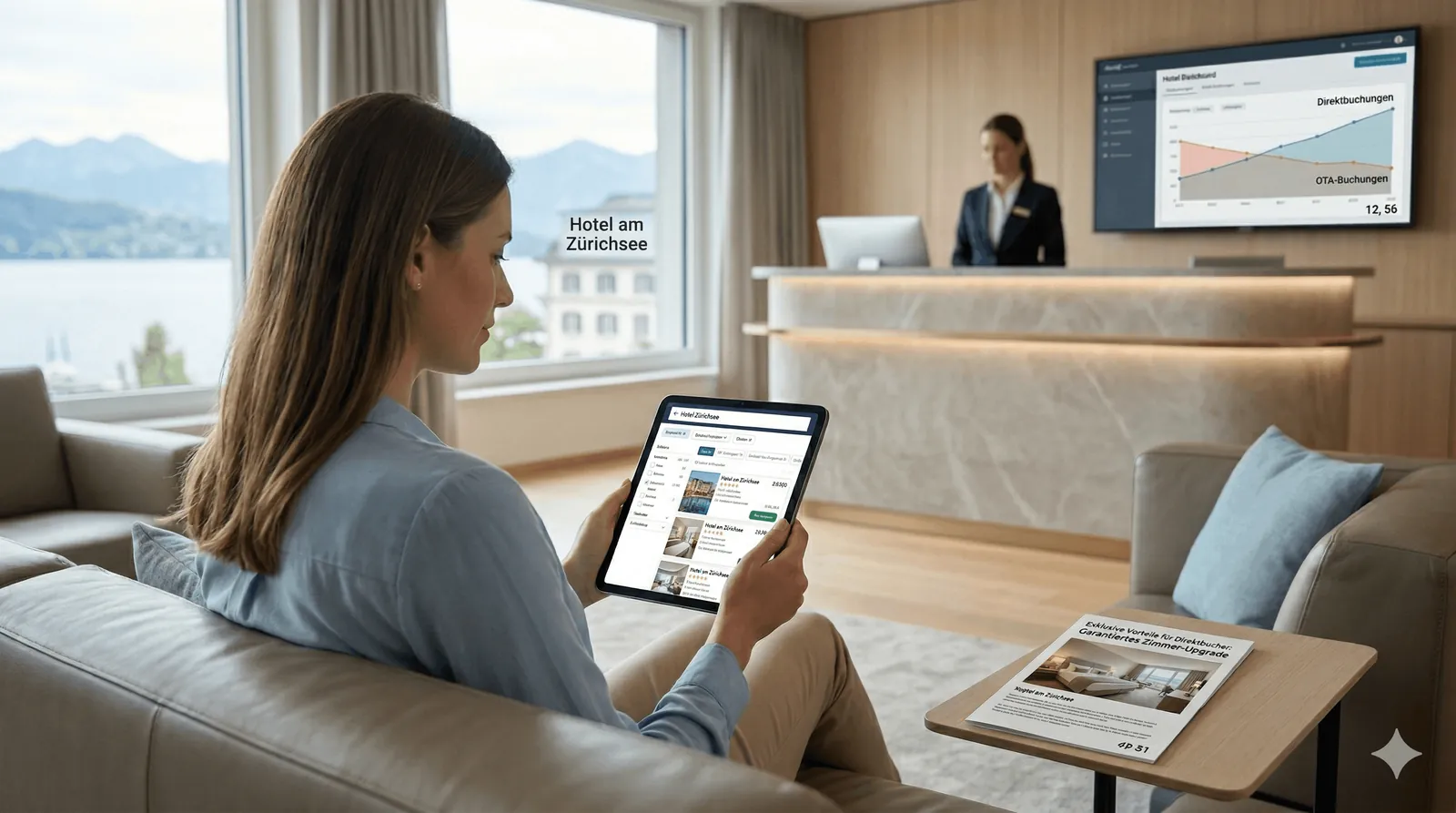
At first this might sound like just another technical update, but in reality it is a frontal attack on established Online Travel Agencies (OTAs) such as Booking.com and Expedia.
But how exactly does this work, and what does this move mean for the rest of the industry — particularly for smaller, independent hotels?
The AI agent takes over: no links, but action
Until now, hotel search via Google mostly worked like this: the user searched for a hotel, and Google spat out a list of links — either directly to the hotel website or to platforms such as Booking.com.
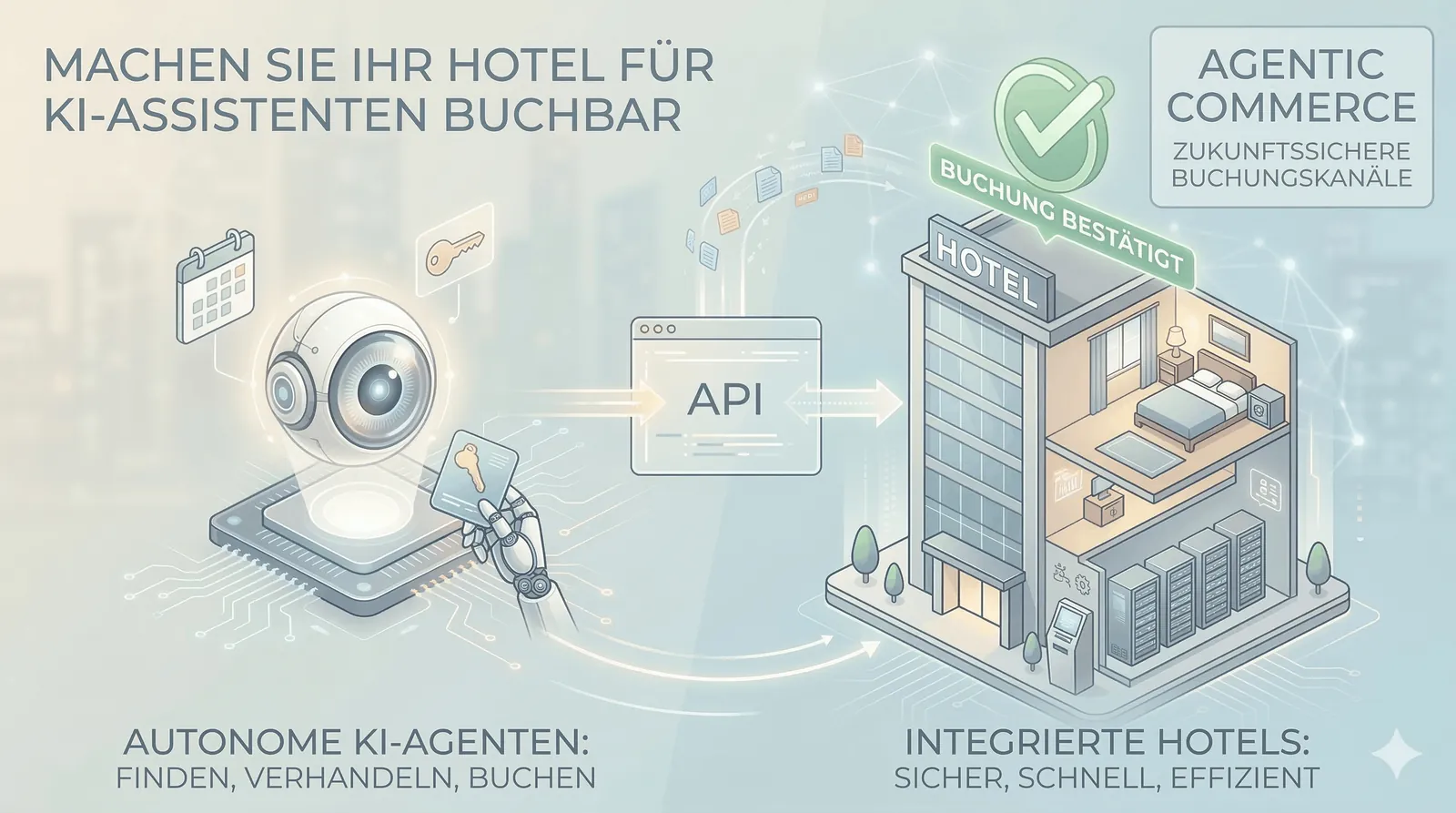
With the new "Agentic AI" approach, this changes fundamentally. Google's artificial intelligence no longer redirects the user, but instead handles the entire booking autonomously within the chat interface. The customer never actually leaves the Google ecosystem, while Marriott receives the booking directly into its system.
For Marriott, this is a brilliant move: Google is used as a highly modern, invisible data pipeline straight to the customer. Dependence on OTAs decreases, immense commission costs are saved, and direct customer relationships are strengthened. Google, in turn, does what it does best: resolving users' search intent as quickly and smoothly as possible, without becoming a hotel provider itself.
What does this mean for smaller and independent hotels?
While industry giants like Marriott have million-franc budgets to co-develop such AI interfaces as pioneers, pressing questions arise for independent hotels and smaller hotel groups. This development brings three key insights for the mid-market:
1. The technological hurdle grows (for now)
An independent boutique hotel cannot simply call Google and demand direct AI integration. In the first phase, large chains will dominate the AI search results, because only they are technologically connected.
2. Power shifts to the tech partners
Small hotels will in future be significantly dependent on how quickly their technology partners (property management systems, booking engines, channel managers) keep up. Providers such as SiteMinder, Cloudbeds or regional software partners need to build these "Agentic APIs" and offer them as a standard feature to their hotel customers. Choosing the right software becomes even more vital for survival.
3. Structured data is the new currency ("the digital shelf")
Artificial intelligence does not read pretty brochures. It needs structured, machine-readable data. If a hotel's room categories, cancellation conditions, images and live availability are not perfectly prepared digitally, Google's AI agent will not know the hotel exists — and consequently will not book it either.
Conclusion: a huge opportunity on the horizon
Even though the development favours the large chains in the short term, it holds an enormous opportunity for the entire industry in the long run. Once the technology is democratised and becomes accessible to everyone through standard interfaces, independent hotels could gain a direct booking channel that massively breaks up the dominance and high commissions of classic OTAs.
Hoteliers must now ask themselves: have we done our digital homework, so that tomorrow's AI can even find us?
Sources:
- Skift: Marriott Says Google AI Mode W...
- Hospitality Net: What You Must Take Away from M...
- Travhotech: Marriott-Google AI Direct Book...
- Hospitality Today: Marriott brings hotel bookings...
Further related articles:
- Google becomes a booking agent (same topic, more recent development)
- Agentic Commerce: Make your hotel bookable for AI assistants (recommended action)
- Booking.com overtakes Google (market context OTAs vs. Google)