An international study of 266 tourism organisations from Switzerland, France, Austria and Canada shows it clearly: destinations struggle with a different kind of visibility problem than individual hotels. While a hotel controls its own website, its own Google Business Profile and its own target audience, a tourism organisation has to bring together multiple service providers, interests and data sources — and still appear as one clear, credible voice on Google, social media and AI systems. This is exactly where it will be decided whether destination marketing still works in 2026.
Problem in everyday hotel business
Many tourism organisations copy strategies that were actually developed for individual hotels: optimise a website, run a few social media channels, occasionally launch a campaign. The problem: a destination does not have one product, but a hundred — hotels, mountain railways, restaurants, experience providers. Each of them has its own data, its own channels and often its own idea of what "good marketing" means. Without a shared structure, visibility fragments, and in the end the destination can no longer be found in AI search at all — or only in fragments through individual businesses.
Current findings from the study / occasion
The international DMO study 2026 (part of the "Resilient Tourism" research series, conducted by Professor Roland Schegg, Marc K. Peter and Michael Fux) surveyed 266 tourism organisations from four countries and delivers some key findings:
- Visibility remains the biggest strategic challenge — but today it is spread across three levels: classic SEO, social networks, and, newly, findability in generative AI systems (GEO, Generative Engine Optimization).
- The bottleneck is not technology, but organisation. Missing skills, tight resources and lack of leadership slow down digital transformation more than missing tools do.
- Data is becoming the actual infrastructure. Many destinations do hold data on businesses and guests, but it sits in isolated silos and is often unusable for AI systems.
- Large and small destinations are drifting apart. Larger organisations invest significantly more often in data platforms and automation, while smaller ones stick to pragmatic marketing measures — the digital divide is growing.
- Switzerland focuses on marketing and operational improvements, while France experiments more with generative AI and GEO, and Austria leads in data platforms.
- DMOs need to evolve from a classic advertising office into the coordinator of a digital ecosystem — whoever meaningfully connects data, partners, content and AI will win the visibility competition going forward.
What does this mean for your destination?
1. One voice instead of a hundred individual opinions
If every business does its own marketing, contradictory messages and duplicated work result. A destination needs a shared content framework — core themes that all partners can refer to without losing their own identity.
2. Consolidate data before investing in AI
Before a destination considers GEO or generative AI, it needs to know what data on businesses, offers and guests actually exists — and whether it is clean, up to date and machine-readable. Without this foundation, any AI strategy remains patchwork.
3. Actively bring small businesses along
To prevent the digital divide between large and small service providers from growing, the destination should specifically support smaller businesses — for example with shared templates for Google Business Profile, uniform image standards or simple checklists for structured data.
Concrete practical example
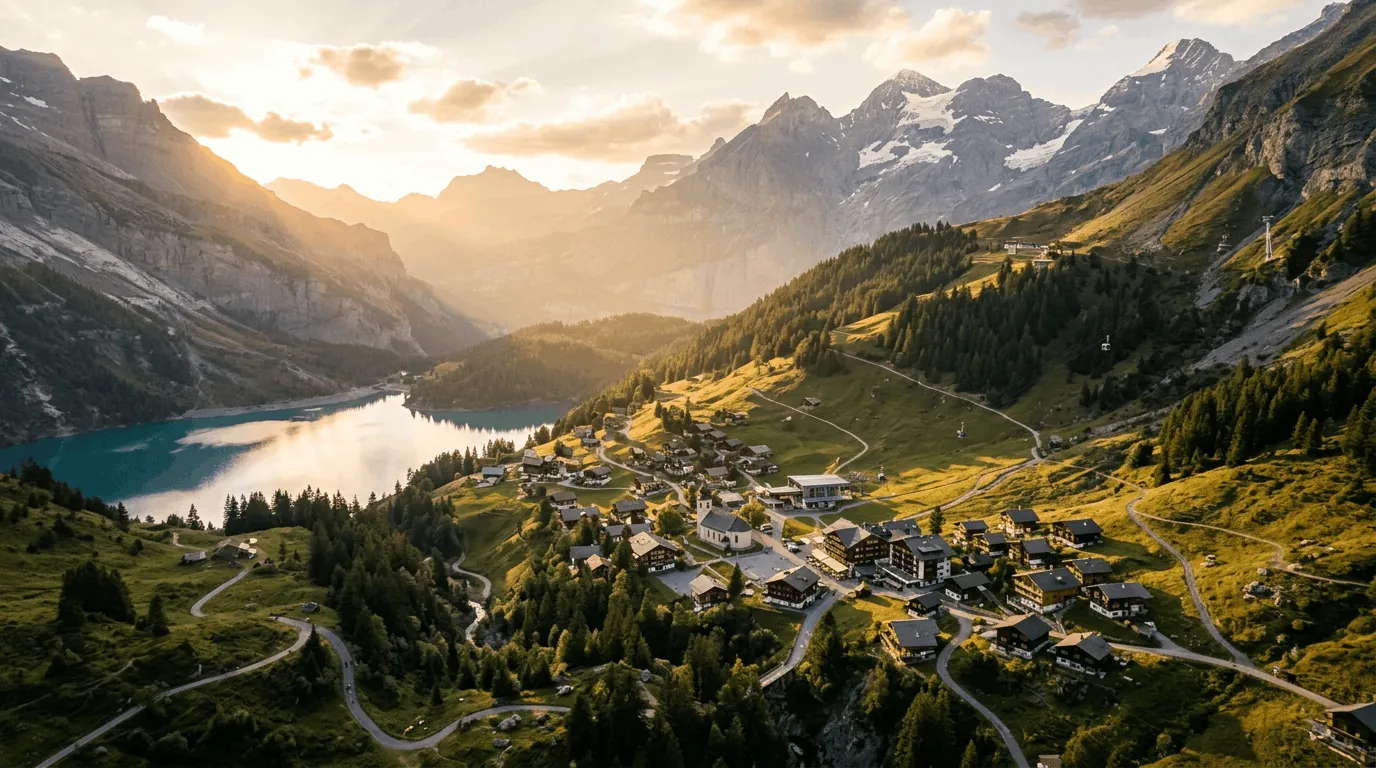
Starting point: A fictional mountain region with around 40 member businesses — from small mountain hotels to a large mountain railway — previously had only one shared website, but each business managed its Google entries and social media channels independently. The result: the region hardly appeared in ChatGPT and Google AI Overviews, because the information was contradictory and incomplete.
Action taken: The tourism organisation introduced a shared data basis for all businesses (opening hours, prices, facilities, directions), defined uniform wording for core offers, and trained the service providers on how to manage their Google Business Profile.
Result / expectation: Within a few months, mentions of the region in AI-generated answers rose noticeably, because the underlying information was, for the first time, consistent and structured. Individual businesses also reported more enquiries via their Google Business Profile.
Common mistakes
- Running destination marketing like individual-hotel marketing — without regard for the multitude of service providers and data sources.
- Leaving small businesses alone with digitalisation — this widens the gap between large and small providers.
- Investing in AI tools before the data foundation is right — without clean, structured information, even the best AI strategy achieves nothing.
Conclusion
Destinations and individual hotels face the same visibility pressure, but not the same task. Tourism organisations that continue to think like a single business lose time and impact. The current study shows: successful destinations will increasingly become coordinators of a digital ecosystem — they connect data, partners and content into a coherent whole. That sounds like a lot of work, but it is achievable if you start small: with clean data, a shared language, and the will to bring all businesses along. The first step towards this is often simply the question: how visible are we actually together — not just as an individual business?
Sources
- Schegg, R., Peter, M. K., Fux, M.: "Digitale Transformation von Destination Management Organisationen (DMOs) — Internationale Studie 2026 (Teil 2)", "Resilient Tourism" research series. Summary published on Hotel Inside: https://hotelinside.ch/von-seo-zu-ki-wie-destinationen-ihre-zukunft-neu-organisieren-muessen/
More related articles:
- Cooperative marketing: When hotel, mountain railway and tourist office advertise together (directly related topic)
- Local SEO for tourism regions (practical implementation for destinations)
- The winners in hotel marketing build systems, not one-off measures (related structural argument)