A single advertising budget is rarely enough to stay visible against large holiday regions or international platforms. More and more businesses recognise this: those who pool marketing resources with neighbours, mountain railways or the local tourist office reach more guests — at lower cost per business. Current industry analyses confirm this trend and bring cooperative marketing more sharply into focus for 2026.
Problem in everyday hotel business
Many small and medium-sized hotels advertise individually: their own website, their own social media channels, their own small ad budget. The result is often sobering, because the budget for effective reach is simply too small. At the same time, the local tourist office promotes the region as a whole, the mountain railway promotes its facilities, the indoor pool promotes its offering — usually without coordination. The guest journey — arrival, overnight stay, activity — is thus promoted in three different places with three different messages, instead of as one coherent experience.
Current findings from studies and industry events
Current trend analyses on tourism marketing 2026 (including from TravelSpike and IATA) as well as specialist articles on hotel-destination cooperations in Switzerland show several clear developments:
- Cooperation is becoming the norm, not the exception. Industry analyses note that no one wins alone in the travel industry any more — in 2026, significantly more destinations, brands and service providers are relying on joint campaigns rather than individual actions.
- Pooled budgets enable richer offers. When tourist office, mountain railway and hotels combine their resources, combination packages emerge (e.g. overnight stay plus mountain railway ticket) that are more attractive to guests than individual services — and that hardly anyone could have afforded alone.
- Small properties benefit especially from good DMO integration. Specialist analyses of Swiss hotel marketing show that businesses with a clear thematic positioning and close cooperation with the destination marketing organisation (DMO) achieve more visibility than businesses that advertise on their own.
- Regional theme campaigns specifically fill low-season gaps. A property with a clear positioning (e.g. as an active or wellness hotel) automatically benefits from thematic regional campaigns on hiking, winter stillness or autumn cuisine — provided the offering matches the positioning.
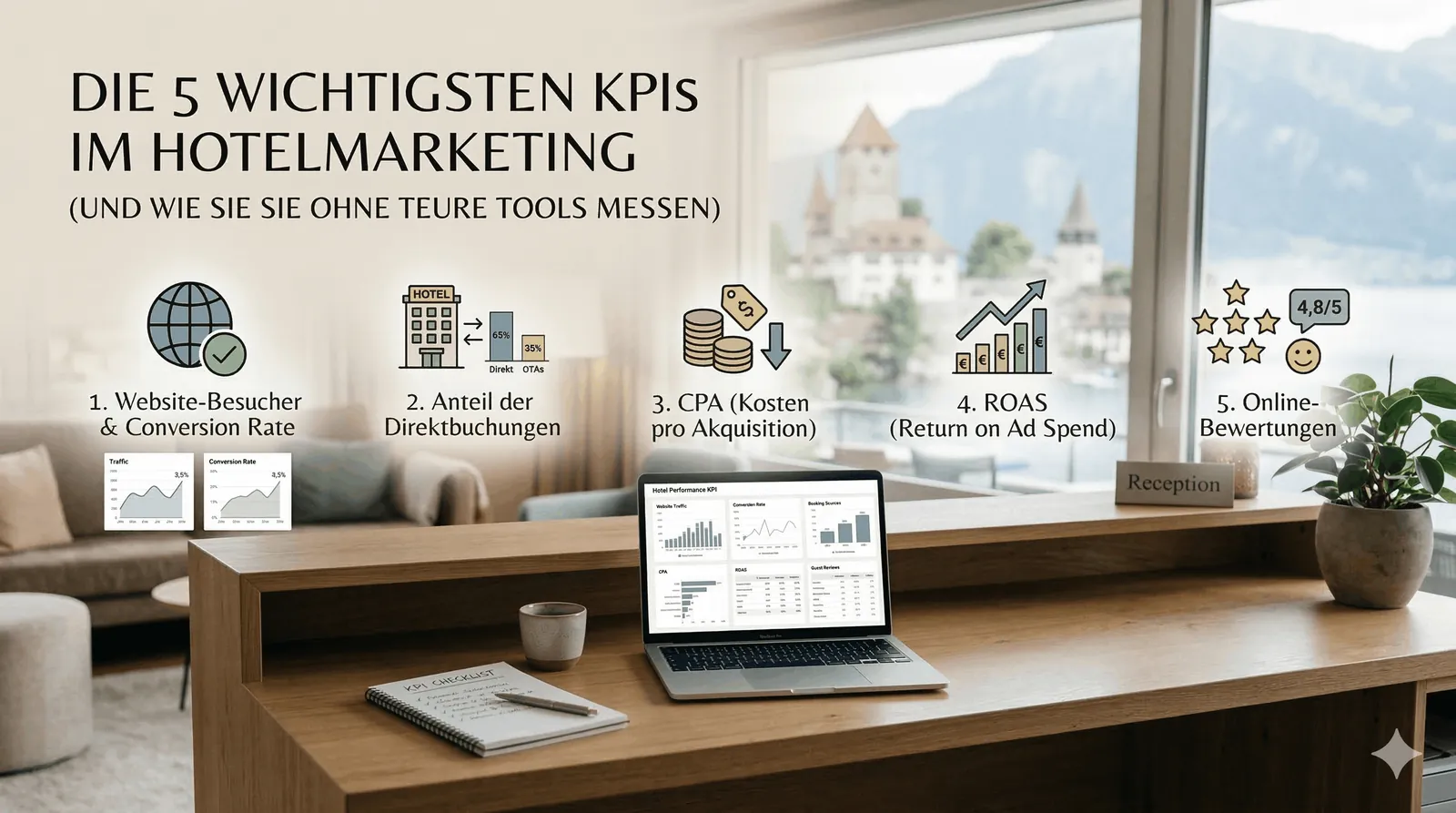
- Success measurement shifts to the region. Meaningful metrics for cooperative marketing are not just your own direct bookings, but also average length of stay, cross-bookings with experience providers and reviews with a regional reference.
What does this mean for your hotel?
1. Clear positioning as a prerequisite
Before a cooperation makes sense, it must be clear what your property stands for. A hotel without a recognisable profile benefits from no regional theme campaign. A clearly positioned hiking or family hotel, on the other hand, can connect directly to existing campaigns.
2. Approach the DMO proactively
Do not wait for the tourist office to approach you. Ask specifically about planned theme campaigns and put your property forward as a partner — with a concrete offer that fits the campaign.
3. Joint packages instead of parallel advertising
Check with the mountain railway, indoor pool or local experience providers whether a joint package makes sense. A combination offer can be promoted jointly, shares the costs and appears more attractive to guests than three separate bookings.
Concrete practical example
Fictional example, realistically modelled.
A mountain hotel in a medium-sized Valais ski resort had previously advertised exclusively via its own website and a small social media channel — with limited effect outside the main season. Together with the local mountain railway and the tourist office, the hotel developed a package "3 nights plus ski pass" that was promoted simultaneously across all three channels: on the tourist office website, in the mountain railway's newsletter and on the hotel's own page. Advertising costs were shared proportionally, and the message was consistent. In the first jointly promoted low season, the hotel recorded noticeably higher occupancy than in the same period the previous year, and several guests booked directly with the hotel via the tourist office's link.
Common mistakes
- Cooperation without a shared message. If each partner continues to use its own advertising language, the offer appears cobbled together to guests instead of coherent.
- Unclear cost allocation from the start. If it is not agreed in advance who bears which share of advertising costs, cooperations often fail before the first joint contribution.
- Entering a cooperation without a clear positioning of your own. A hotel without a recognisable profile gains little from a theme campaign, because the region's message does not match its own offering.
Conclusion
Cooperative marketing is not a renunciation of your own brand, but a way to achieve more impact with a limited budget. Those who position themselves clearly and actively seek dialogue with the mountain railway, tourist office and other service providers benefit from a reach that a single business could hardly build alone. The first step is straightforward: seek dialogue with the local DMO and check which joint campaign or combination offer fits your own property.
Sources
- TravelSpike: 2026 Travel Marketing Trends — The Strategic Playbook for What's Coming Next, travelspike.com
- 48concepts: Tourismus-Marketing 2026 — Der Leitfaden für Hoteliers, 48concepts.de
- IATA: Destination Marketing — Where to Focus Attention, iata.org
- Hospitality.today: Destination Marketing in 2026 — What Hoteliers Need to Know (Sojern's 2026 State of Destination Marketing), hospitality.today
Other related articles:
- Why destinations need to operate differently than individual hotels (related topic destination marketing)
- Local SEO for tourism regions (shared visibility of region and businesses)
- Looking for a tourism marketing agency? (positioning as a prerequisite for cooperations, mentioned in the teaser)