Why Google's new AI ad formats are relevant for hoteliers now
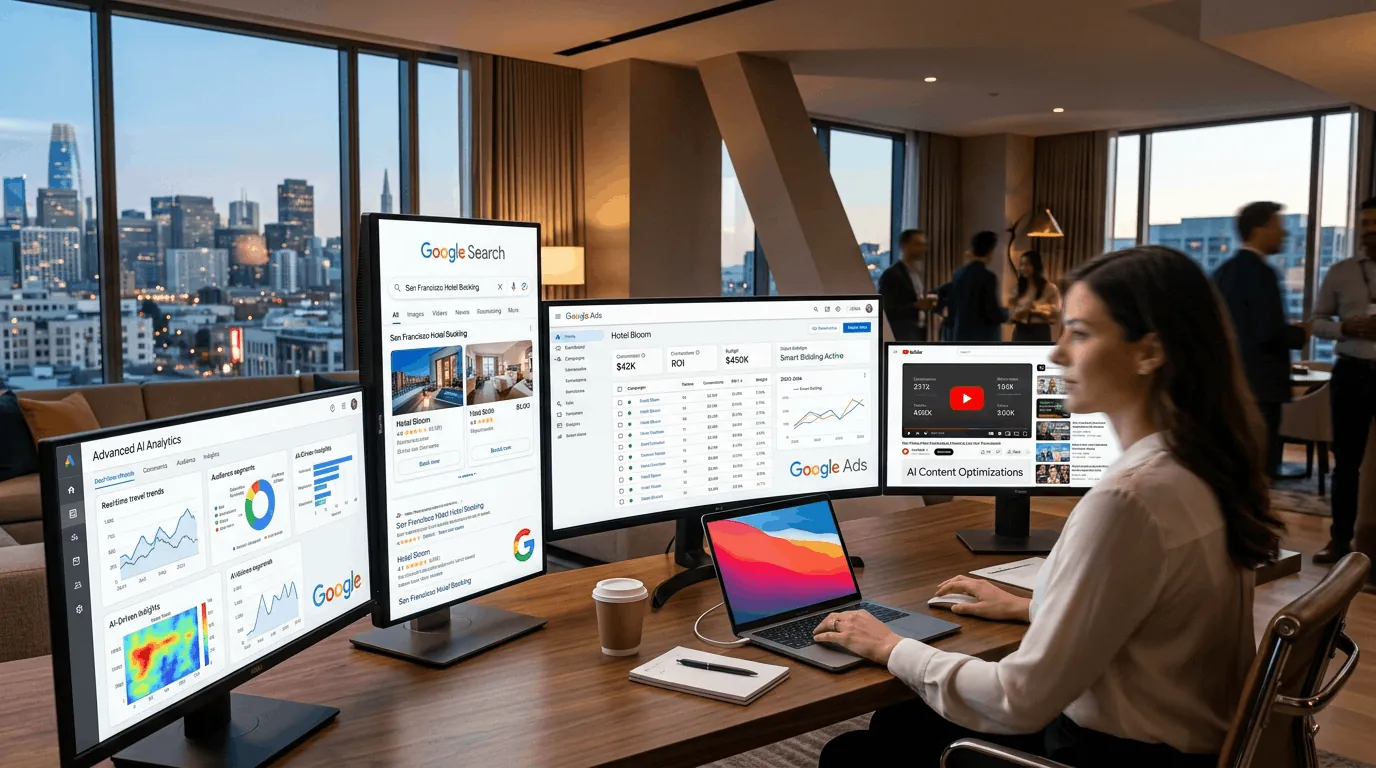
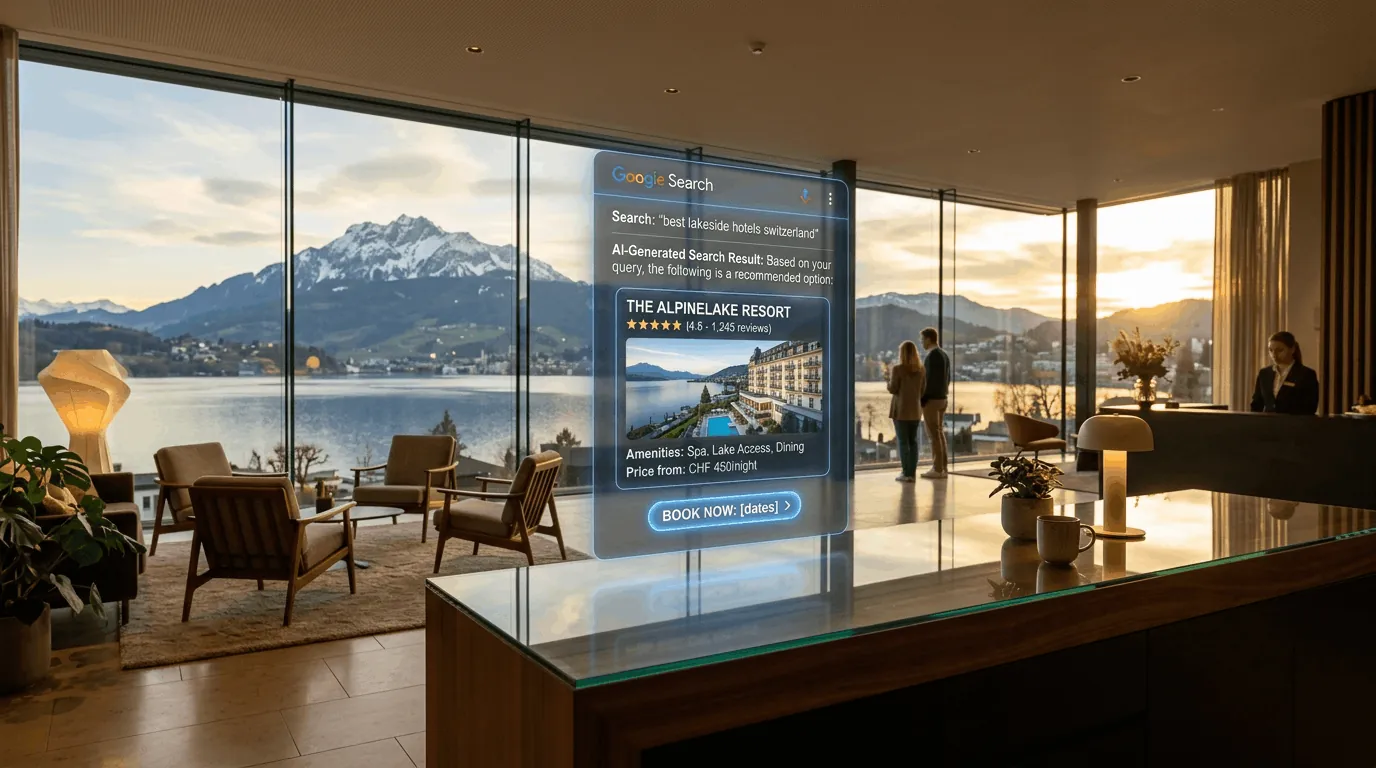
Imagine this: a guest types «Boutique Hotel Lucerne with lake view» into Google — and no longer gets a classic list of results, but an AI-generated answer directly on the search results page. With recommendations, prices, availability — and ads embedded directly into this AI answer. This is exactly what is happening right now. Google presented new ad formats at I/O this week and had already officially extended its new advertising platform «AI Max» to the travel and hotel industry in April and May 2026.
The problem in everyday hotel business
Most hoteliers still know Google Ads from the old world: you book keywords, write ad copy, set a budget — and hope the ad appears at the top. That worked for years.
But Google is currently changing fundamentally how search results look. More and more users receive what is called an «AI Overview» instead of a classic list of results — a summarised AI answer that Google displays directly on the page. And recently, advertisements have started appearing there too (currently, and on a trial basis only in the US). Anyone who does not know how this new system works is running ads that fewer and fewer people will see in the medium term.
What Google is specifically changing right now
Here are the key developments:
1. Ads now appear within the AI answer
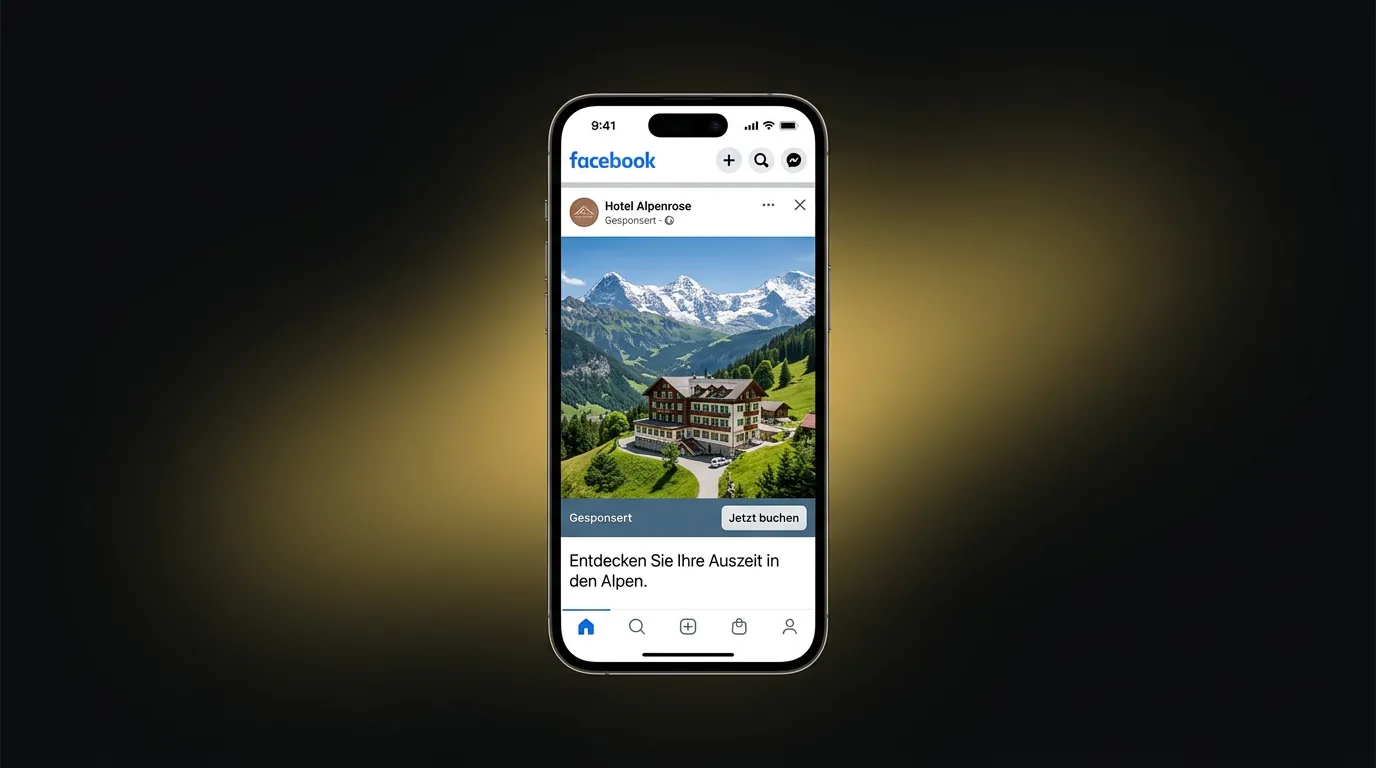
Google now displays advertising directly within the AI-generated summaries — that is, where guests read their travel information today. This is a completely new location for hotel advertising.
2. AI Max is now available for hotels
«AI Max» is Google's new AI-powered advertising platform. It was officially opened to the travel industry on 30 April 2026. The system decides for itself when and where an ad works best — and automatically adapts the text to the search query.
3. Direct booking links are being tested
Google is currently testing whether hotel websites with live prices are linked directly within the AI answers — without a detour via Booking.com or Expedia. This would be a real advantage for hotels with their own booking engine.
Where does the rollout stand today — and what applies to Switzerland and the DACH region?
AI Max for Search campaigns has been generally available worldwide since April 2026. The extension to Travel campaigns is currently still in a closed global beta phase — meaning not every ad account has access yet. For Switzerland, Germany and Austria the following applies: AI Mode (Google's new, conversational search interface) has been active for logged-in users in Switzerland and the DACH region since October 2025. Ads within this AI search environment are being rolled out step by step. A concrete timeline for the full DACH rollout of the travel-specific AI Max campaigns is not yet available — however, Google has announced that it will communicate further details during the course of 2026.
What does this mean for your hotel?
Point 1: your website is now your most important advertising tool
Google's AI system reads your website and decides whether your hotel is relevant. Anyone with outdated text, poor images or missing information is at a disadvantage in the new system — regardless of how much budget they invest.
Point 2: direct bookings are becoming more realistic — if you are ready
Google is testing linking hotels directly within AI answers. This is a major opportunity for direct bookings. But only if your website has up-to-date prices, a functioning booking engine and clear content. In the medium term, it will also need to offer booking options for agents.
Point 3: those who do nothing now will pay more tomorrow
The large OTAs such as Booking.com and Expedia are investing heavily in Google AI Max. They will occupy the new ad placements — and push your hotel aside if you do not keep pace.
Common mistakes hotels are making right now
Mistake 1: waiting and observing
«That won't reach us for a few years yet» — this is often heard. But Google AI Max has been active since April 2026 and will be fully rolled out in Europe over the coming months as well. Those who wait now lose valuable time.
Mistake 2: increasing budget without adjusting the website
Putting more money into Google Ads without optimising the website is like pouring more water into a leaky glass. The AI system rewards relevance — not budget.
Mistake 3: neglecting your own website and relying only on advertising
AI Max is not a substitute for a good website. The system reads your content, evaluates it and decides on this basis whether your hotel is relevant. Anyone with an outdated or content-poor website simply gives the system too little to work with to deliver good results — no matter how well the campaign is set up. Website and advertising must go hand in hand.
Conclusion
Google is currently changing how travellers find hotels — and how hotels pay for it. The new AI ad formats are not a distant future, they are the present. Those who adapt their website, their content and their advertising strategy now can benefit from this development — with more visibility, more direct bookings and less dependence on the large booking platforms.
The good news: you do not need to be a technology expert. You only need to understand that Google today reads, evaluates and recommends content — just like a well-informed travel advisor. And this advisor only recommends hotels that give them good answers.
Reconsider how your hotel is presented online. Not at some point — but now.
Sources
- Google Ads & Commerce Blog, 30 April 2026: Announcement of AI Max for Travel
- Skift, 30 April 2026: «Google's AI Max Positions Travel Ads for AI Overviews and AI Mode»
- Hospitality.today: «Google expands AI Max into travel advertising»
- Vizup, May 2026: «Google AI Mode Hotel Booking Links: Direct to Hotels»
- PPC.land: «Google merges travel ad formats into Search campaigns with AI Max»
- Bookassist Blog: «Google's New AI Ads: What Hoteliers Need to Know»
- Sandblue.ch: «Google Launches AI Mode in Switzerland: Search Is Changing»
Further related articles
- Google Marketing Live 2026 (most recent Google Ads updates, thematically related)
- Google I/O 2026 (Google's overarching AI strategy)
- 68% of Google searches end without a click (context: changed search logic)