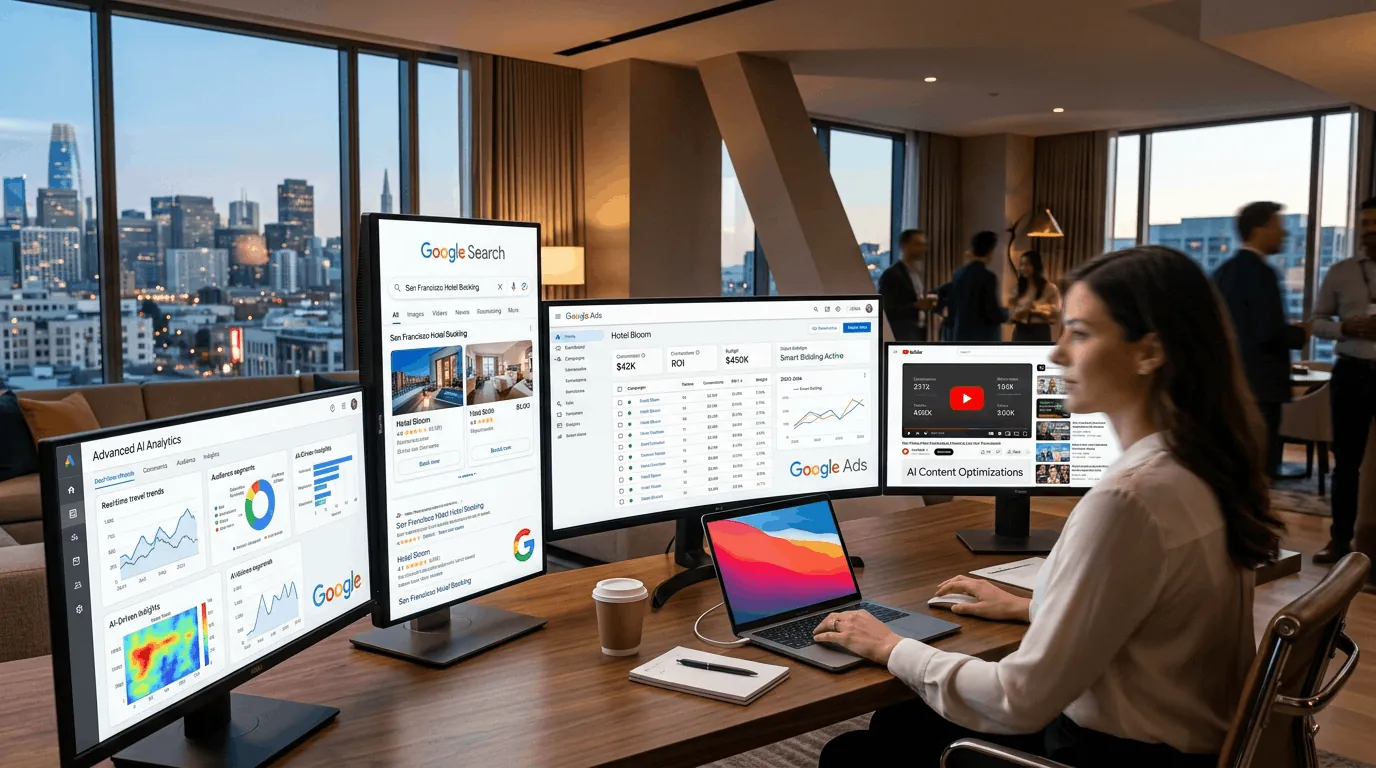
At its annual advertising summit — Google Marketing Live 2026 — Google presented the biggest changes in digital marketing in years. For hoteliers, this is not abstract tech news: it is about how your guests will search, compare and book in future. Those who understand these developments can act early — and secure a real advantage over the competition.
The problem in everyday hotel life
Many hoteliers run Google Ads on the principle of «it kind of works» — without knowing whether their campaigns are still set up in line with the times. Guests' search habits are changing rapidly: queries are getting longer, more personal, more complex. Those who do not adapt their advertising pay for clicks that no longer convert.
What Google Marketing Live 2026 shows
At the event, Google sent a clear message: AI is no longer the future — it is the standard. Here are the key findings for the hotel industry:
- AI Mode has reached over 1 billion monthly users. AI-powered search is no longer a niche product — it is mainstream.
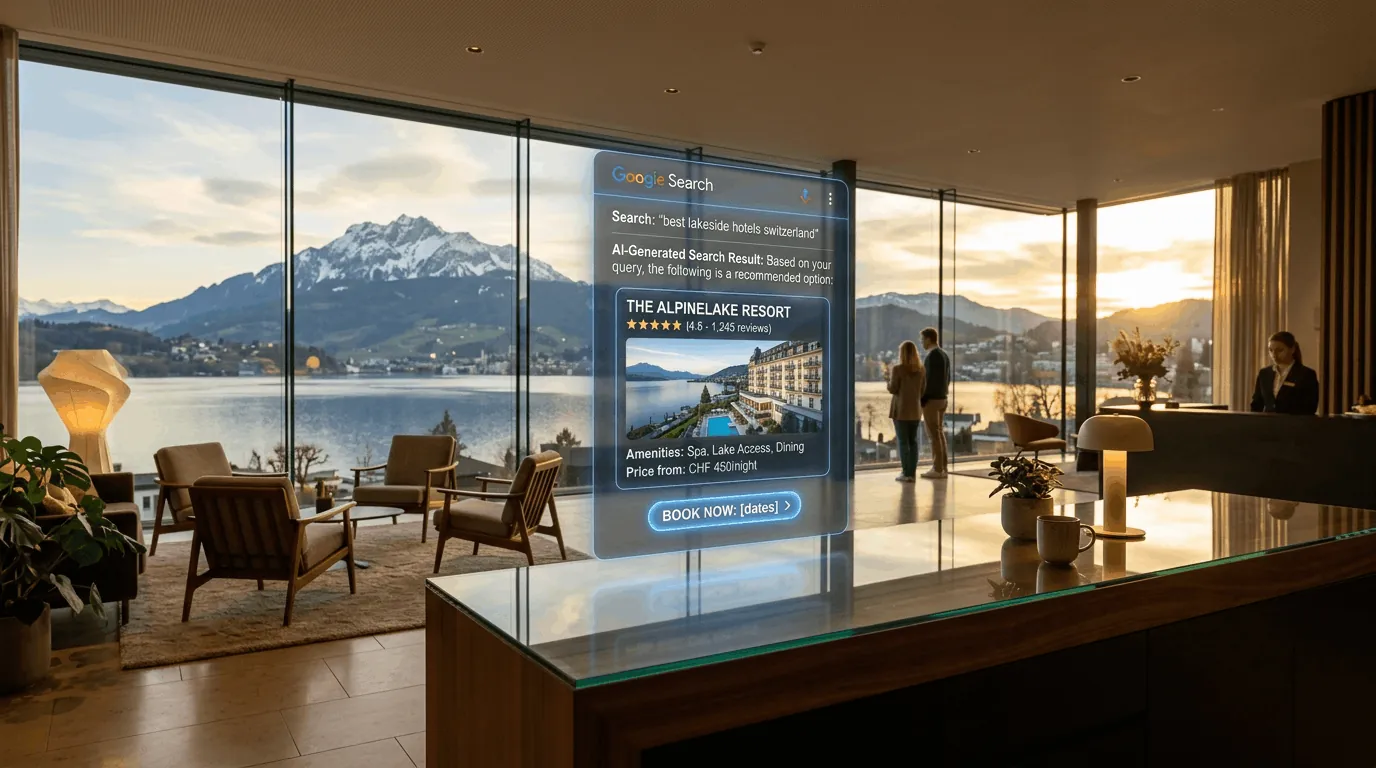
- AI search queries are three times as long as classic search queries. Guests describe their wishes in more detail: «Family hotel with indoor pool and childcare in Graubünden for mid-February» instead of just «Hotel Graubünden».
- Advertising now appears directly within AI answers — initially in the USA. Google is integrating ads seamlessly into AI Mode — as part of the conversation, not as an interruption. In Europe, this feature is not yet available due to the Digital Markets Act (DMA), but is likely to follow in the medium term.
- Agentic Commerce is taking shape. With the new Universal Commerce Protocol (UCP), AI assistants can access product data, availability and prices directly — and initiate bookings without the guest visiting a website.
- YouTube beats TikTok and Instagram Reels in reach: 45% of YouTube Shorts users are not on TikTok, 65% are not on Instagram Reels. This makes YouTube a channel that no other network can replace.
- Creative content drives almost half of all sales (49% according to NCSolutions). Those with poor images and copy in their ads lose out — no matter how good the targeting is.
What does this mean for your hotel?
1. Your ads need to be ready for longer, more complex search queries
Guests no longer search with two words. They describe their trip as if in a conversation. Google AI Max — the new campaign format — automatically adapts ads to such long queries. Lufthansa Group increased its conversion rate by 16% and ROAS (Return on Ad Spend, i.e. the return per Swiss franc of advertising spend) by 24% with it. This shows: those who use AI Max reach guests at the right moment.
For your hotel this means: check whether your Google campaigns have been switched to AI Max or Performance Max. Classic keyword campaigns alone are no longer enough.
2. Your product data needs to be complete and up to date
Agentic Commerce — i.e. booking via AI assistants — only works if your hotel information is fully available in Google Merchant Center or via structured data on your website. Those with incomplete data simply will not be found or recommended by AI assistants.
In practice: make sure room types, prices, availability, amenities and images are kept up to date and complete — both on your website and in Google systems.
3. Invest in better images and videos — now
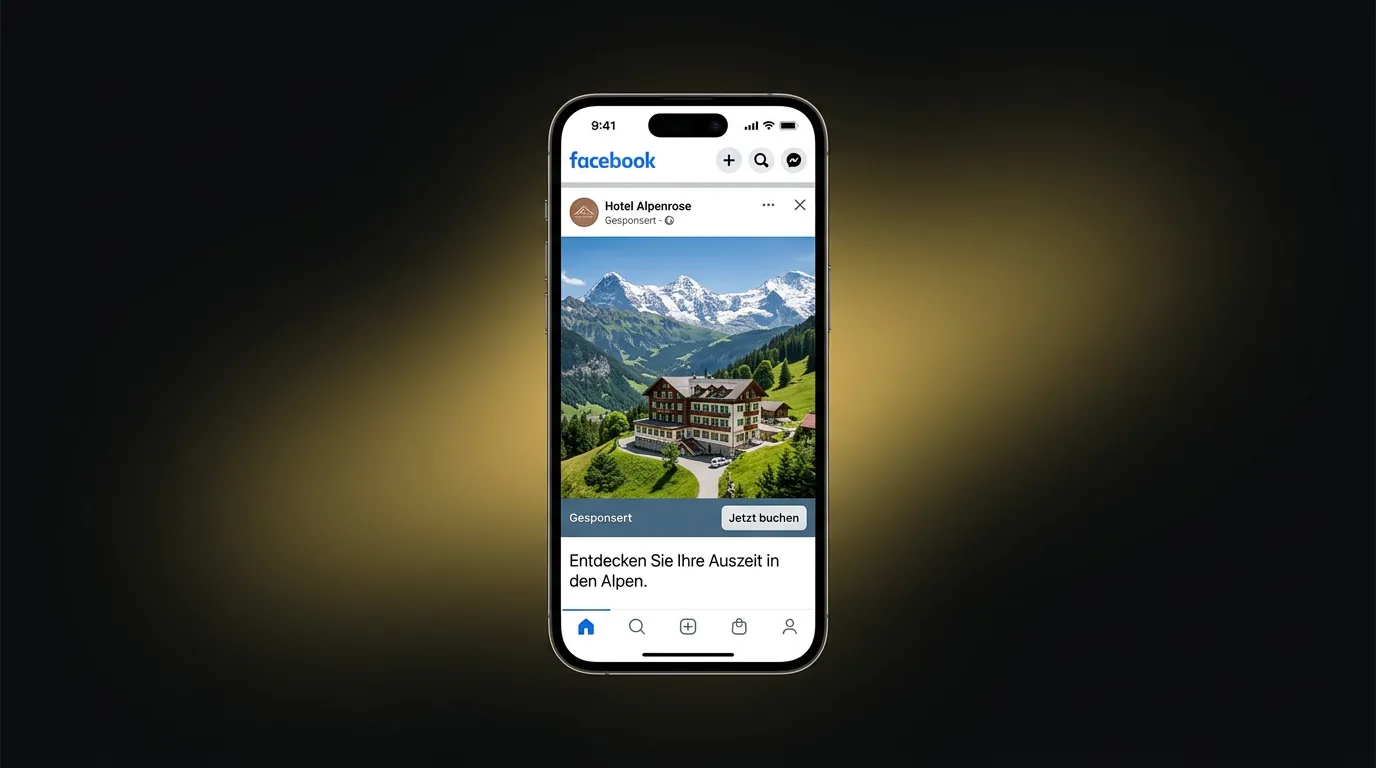
Creative content is the biggest lever for advertising success. Google has introduced new tools with Asset Studio and the AI video model Veo, allowing even small businesses to create professional advertising material. Poor photos and generic copy cost you bookings — regardless of budget.
For your hotel: invest in one professional photoshoot day per year. Use AI tools to turn existing photos into short videos for YouTube and social media.
Common mistakes
1. Campaigns left unchanged for years.
Many hotels are still running campaign structures from 2021 or 2022. Google has fundamentally changed the platform since then. Those who do not regularly review and adapt pay for outdated mechanisms.
2. Incomplete data in the Google system.
Missing room details, outdated prices or poor images in the Google profile mean the hotel is not shown in AI answers, or shown incorrectly. This costs trust — and bookings.
3. YouTube is ignored.
Many hoteliers think YouTube is only for large brands. But the figures show: YouTube reaches target groups that are not as accessible on any other platform. Even short, authentic videos can be effective — without a large budget.
Conclusion
Google Marketing Live 2026 makes it clear: search is changing faster than ever before. AI-powered ads, longer search queries and the possibility of AI assistants booking directly are no longer future scenarios — they are reality. For hoteliers this means: those who do not regularly review and adapt their Google campaigns lose visibility to competitors who react faster. The good news: the new tools are also accessible to smaller businesses. It does not require huge budgets — but it does require the willingness to engage with the topic. Start with one step: check today whether your Google campaigns are still set up in line with the times.
Sources
- Google Marketing Live 2026, presentation and accompanying document «Marketing at the speed of AI», Google, May 2026
- Google I/O 2026: AI Mode user numbers and search query length, Google Internal Data
- Nielsen Media Impact, November 2025: YouTube reach USA
- GWI Survey, February 2025: YouTube Shorts vs. TikTok / Instagram Reels
- Nielsen Gauge U.S., February 2026: YouTube streaming market shares
- Google Internal Data, H2 2025: Demand Gen conversion increase
- Nielsen MMM meta-analysis, 2024 (commissioned by Google): Demand Gen ROAS
- Circana LLC, MMM meta-analysis, 2025 (commissioned by Google): YouTube long-term ROAS
- NCSolutions, 2023: Influence of creative material on advertising effectiveness
Further related articles:
- New campaign formats at Google: AI Max (previous topic, directly related)
- Google I/O 2026 (related keynote, a few weeks earlier)
- Google now tracks hotel prices (another current Google development)