Why this matters now
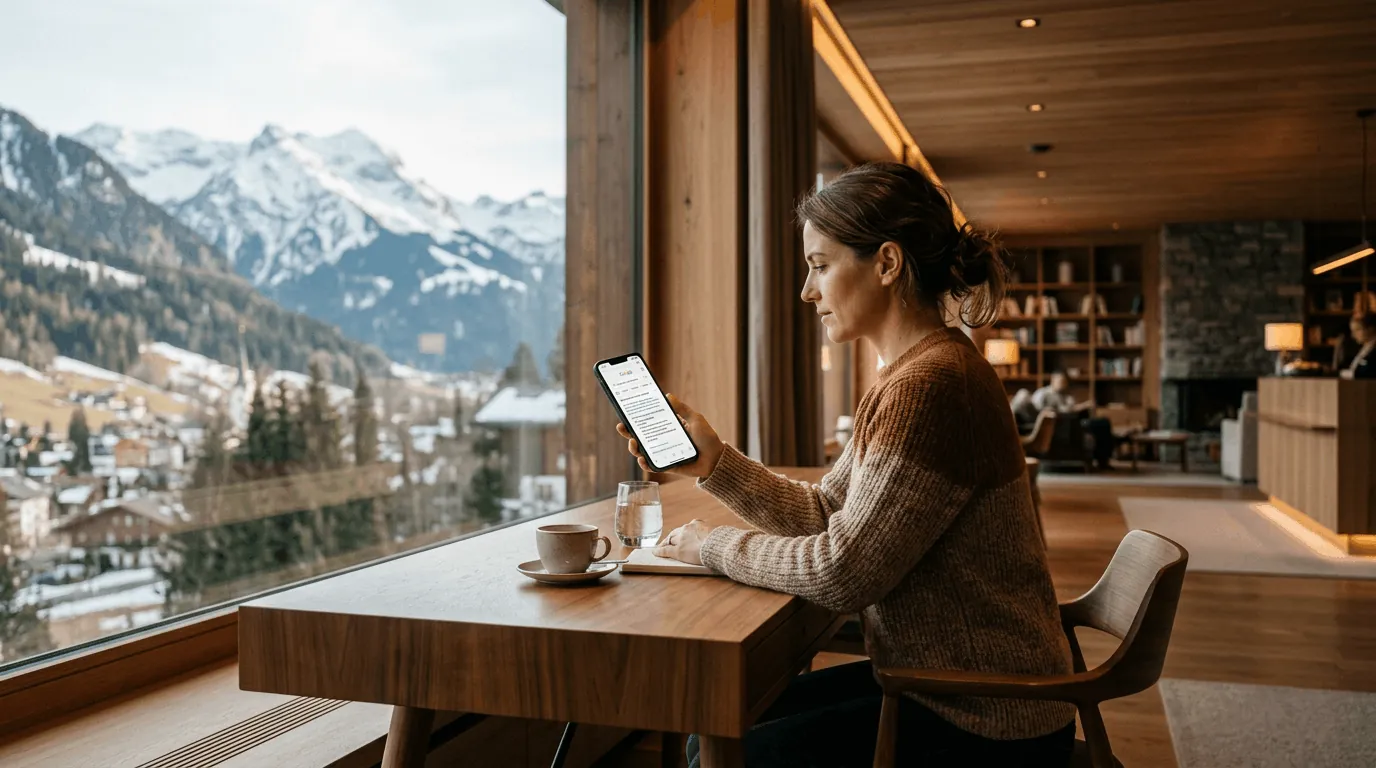
On 19 May 2026, Google announced what is arguably the biggest change to search in 25 years at its annual developer conference, Google I/O. If you run a hotel and want to be found online, you should pay close attention — because the way travellers search, compare and book is fundamentally changing right now. Not at some point in the future. Now.
The problem in day-to-day hotel operations
Many hoteliers know this situation: you invest in a good website, keep the photos up to date, respond to reviews — and yet most bookings still come through Booking.com or Expedia. Your own visibility in Google search is hard to influence, and the rules of the game keep changing.
What used to work — good keywords, a fast website, a well-maintained Google profile — will no longer be enough on its own. Google is currently restructuring search so that users no longer need to click on websites at all. The answer comes directly from the AI.
What Google announced at I/O 2026
Here are the key changes — explained in simple terms:
1. AI Overviews and AI Mode merge into a single experience
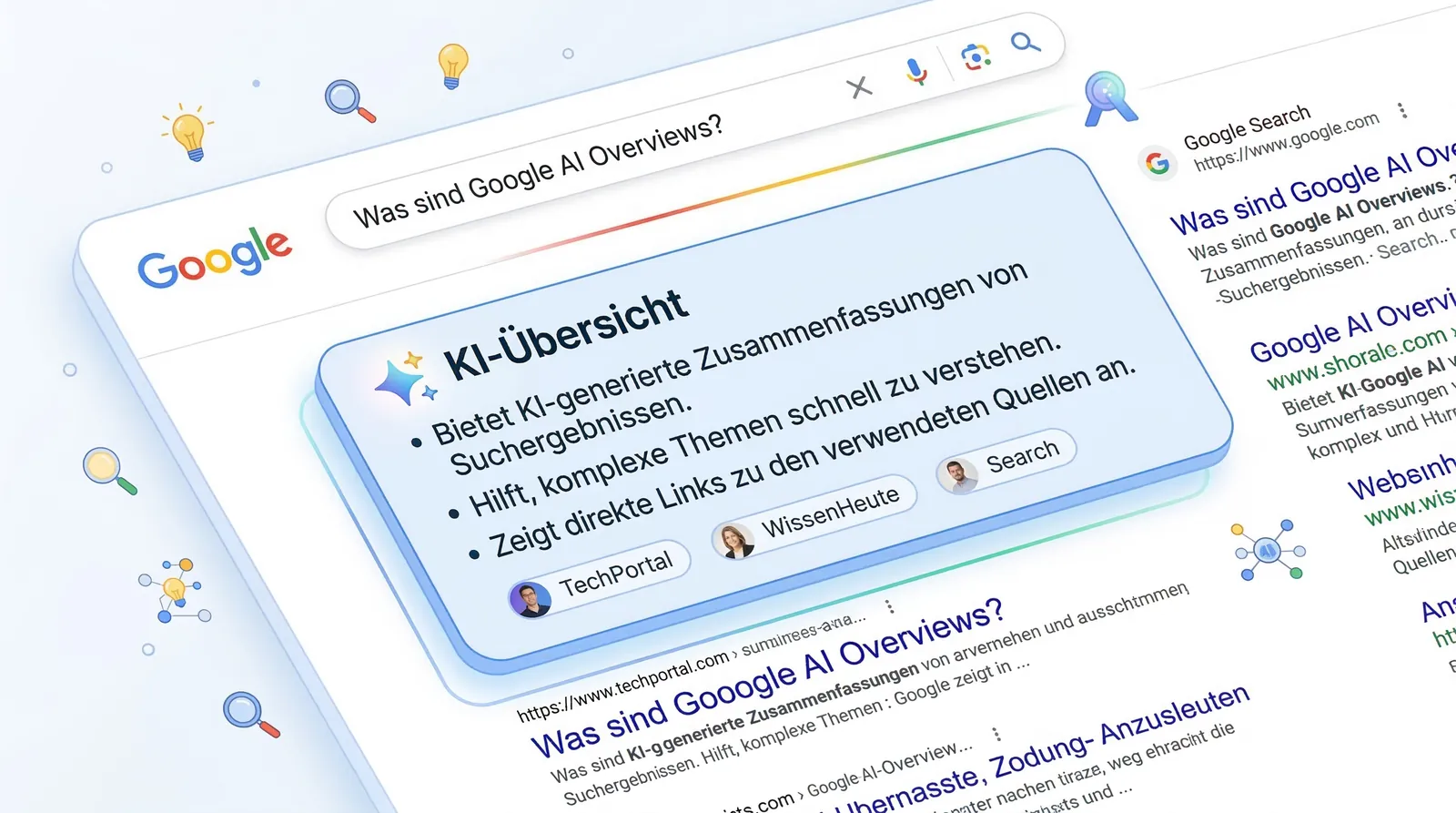
Until now, there were two separate areas: the AI summary at the top of search results (AI Overviews) and the separate "AI Mode" for deeper questions. These are now being combined. This means that anyone searching for a hotel gets an AI-generated answer directly — including recommendations, comparisons and information — without necessarily having to click on a website.
2. The search box now understands images, videos and files
Google calls it "the biggest upgrade to the search box in 25 years". Users can now enter not just text, but also upload photos, videos or documents. So if someone sees a photo of a hotel and wants to know more, they can upload it directly into the search.
3. Gemini Spark: the personal AI agent takes over tasks
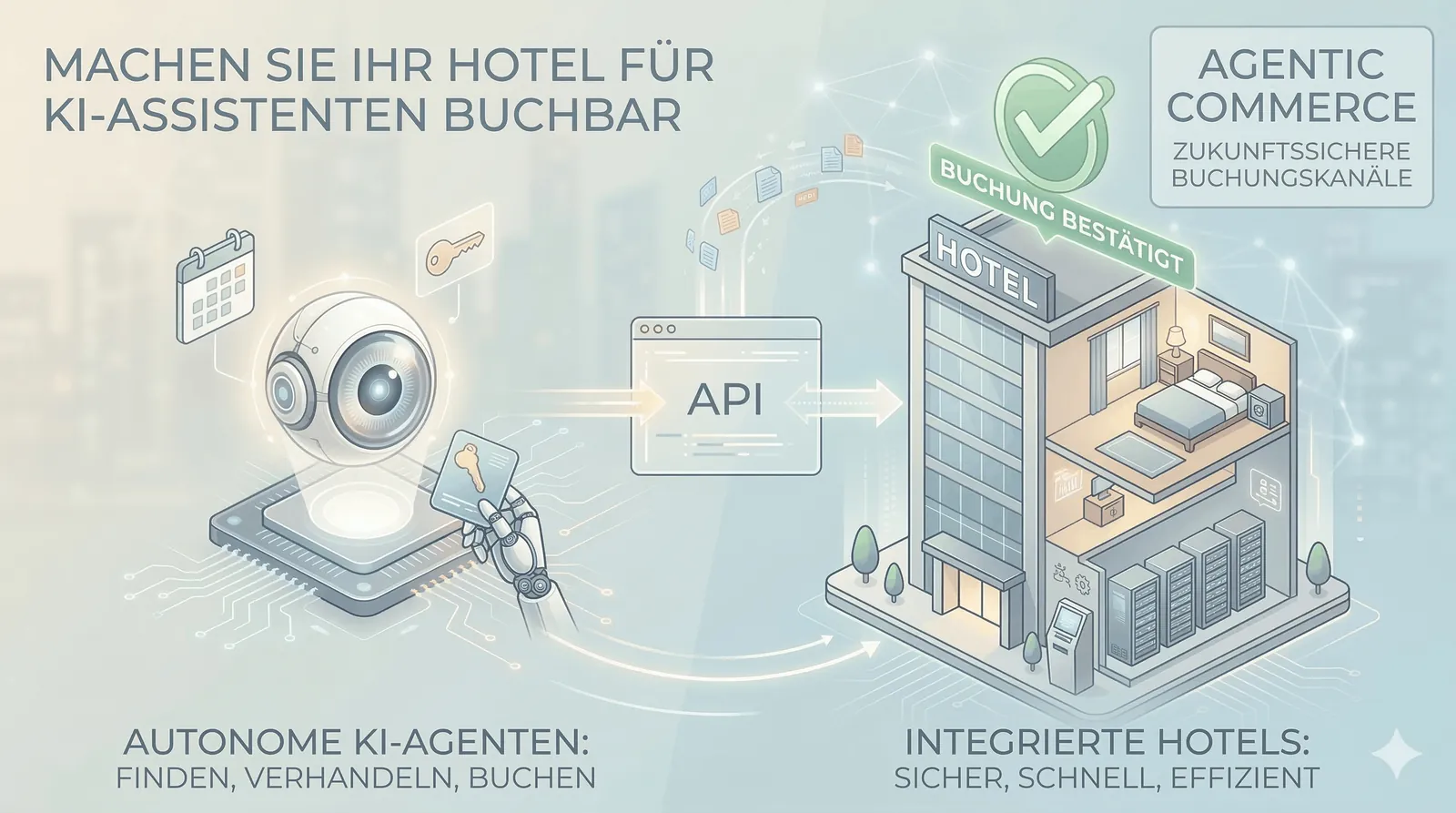
Gemini Spark is Google's new AI agent that can act independently — not just answering questions, but completing tasks. For example: planning a trip, checking availability, comparing offers. The user sets the goal, the AI does the rest.
4. Universal Cart: booking without leaving the website
Google has introduced a universal cart that works across Search, Gemini, YouTube and Gmail. Users can book products — and, going forward, also travel and accommodation — directly within Google, without switching to the hotel website. Partners such as Amazon are already on board. The travel industry is following.
5. Agentic Shopping: the AI shops for you
Through the so-called "Universal Commerce Protocol" (UCP), AI agents will in future be able to carry out the entire booking process through to checkout themselves — on behalf of the user. This is no longer science fiction — it is currently being rolled out.
What does this mean for your hotel?
1. Your website needs to answer questions — not just provide information
The AI reads your website and derives answers for people searching. Anyone who writes clearly and specifically — "Our wellness area is open daily from 7am to 10pm and includes a sauna, steam room and outdoor pool" — has a better chance of appearing in AI answers than someone who only lists "wellness" as a keyword.
2. Your Google profile becomes even more important
Since the AI draws information from various sources, a complete and up-to-date Google Business Profile (formerly: Google My Business) is essential. Photos, opening hours, offers, reviews — all of this feeds into the AI's answers.
3. Direct bookings become harder — but not impossible
If Google itself increasingly acts as a booking channel (Universal Cart), pressure on direct bookings will increase. Hotels that now invest in their own booking process and clearly communicate advantages for direct bookers (for example, breakfast included, free cancellation, best-price guarantee) are better positioned.
Practical example: the boutique hotel that suddenly becomes invisible
Starting point: Hotel Alpenstern*, a charming 24-room boutique hotel in the Bernese pre-Alps, has an attractive website and a well-maintained Google profile. Until now, around 30% of bookings came directly through its own website.
The problem: Since AI Overviews began dominating search, fewer and fewer users click through to the website. The AI does display hotels in the region — but Alpenstern barely appears, because the website text is too generic ("Cosy rooms in a beautiful location").
The measure: The hotel reworks its website text with specific, question-oriented phrasing: "Which rooms are suitable for families with young children?", "Is there parking directly at the hotel?", "What is included in breakfast?" At the same time, the Google profile is enlivened with current photos, special offers and regular posts.
The result: The hotel appears more often in AI-generated answers — and those who do click through to the website find clear information and a simple booking process with visible advantages for direct bookers.
Common mistakes
1. Wait and see
"This hasn't reached us yet" — you hear this often. But Google is rolling out these changes globally. Anyone who does nothing now will lose visibility before they even notice.
2. Optimising only for keywords
Classic SEO (search engine optimisation) — that is, deliberately inserting search terms — is no longer enough. The AI assesses whether your content actually answers real questions and is trustworthy.
3. Neglecting the Google profile
Many hotels update their Google profile only rarely. Yet today it is one of the most important sources of information for the AI — and therefore for potential guests.
Conclusion
Google I/O 2026 has shown: search is becoming a booking engine. AI agents plan trips, compare hotels and carry out bookings — on behalf of users. It sounds like a vision of the future, but it is already underway.
For hoteliers, this means: anyone who wants to remain visible needs to rethink their digital presence. No longer just "we are online" — but "we answer the right questions, at the right time, in the right place". This is not a technical task. It is a strategic one.
The good news: those who act now still have a head start. Because most competitors are still waiting.
* fictitious business
Sources
- Google I/O 2026 Keynote, 19 May 2026: blog.google
- SEO Südwest: Google I/O 2026 — Gemini 3.5, AI Overviews and AI Mode merge in search: seo-suedwest.de
- Search Engine Journal: Google Announces New Universal Cart At I/O: searchenginejournal.com
- Heise Online: Google I/O 2026 — AI shopping cart set to unify shopping across all Google services: heise.de
- The Verge: The future of Google is a search box that does everything: theverge.com
- Goldesel.de: Alphabet stock stagnates — Google I/O 2026 brings Gemini agents, Omni and Universal Cart: goldesel.de
Other related articles:
- Google Marketing Live 2026 (follow-up event, related topic)
- New campaign formats at Google: AI Max (concrete advertising impact)
- How visible is your hotel really (overarching topic of AI search)