The new reality: 30 to 40 percent of your guests plan their trip with AI
The figures are shifting faster than the industry wants to admit. According to a Skift/McKinsey survey of 1'002 respondents (June–July 2025), 30% of US travellers used ChatGPT and similar tools intensively for trip planning — up from 13% the previous year. An increase of 124% in twelve months.
Phocuswright puts generative AI usage in travel research at 39% for 2024, Customer Alliance at 40% worldwide, with 62% willingness to use it in future. Among Gen Z and Millennials, the share is already above 60%.
At the same time, according to Hospitality Net and Surfeo (March 2026), more than 80% of the roughly 810'000 hotels worldwide are simply invisible in AI answers. Only about one in six properties even shows up when someone asks ChatGPT, Gemini or Perplexity: "Which hotel would you recommend for a long weekend in the Engadin?"
And this is exactly where an unspectacular page comes into play — a page that on most hotel websites is either missing, forgotten, or buried under marketing platitudes: the FAQ page.
Why the FAQ page is the most important page on your website
Generative Engine Optimization (GEO) — sometimes also called Answer Engine Optimization (AEO) — describes the discipline of structuring content so that AI models understand it, trust it and cite it. Across all the relevant expert sources (Hospitality Net, Lighthouse, Bored Hotelier, O'Rourke Hospitality, Prostay), one single measure keeps being named as particularly effective: a concrete, natural-language FAQ page.
The reason is mechanical. AI assistants output answers in question-and-answer form — so they preferentially cite sources that are also presented in question-and-answer form. A scientific study by Princeton, IIT Delhi, Georgia Tech and the Allen Institute for AI (Aggarwal et al., KDD 2024, evaluated across 10'000 queries and 25 domains) measured this in controlled tests:
- Self-contained answer blocks of 60 to 90 words increase citation probability by 28%
- Dated statistics on the page increase it by 31%
- Named expert quotes increase it by 41%
- In total, GEO-optimised pages are cited as the source of an AI answer up to 40% more often
Lighthouse puts it plainly: "If your website already answers these questions in a clear FAQ format, the AI can cite you directly and recommend you with confidence. If not, the AI moves on to the next hotel that does."
What the AI actually does when someone types "hotel in Zermatt"
In 2026, Hotelrank.ai examined how AI models handle hotel queries in its study "Anatomy of ChatGPT Hotel Search". Three findings matter for practice:
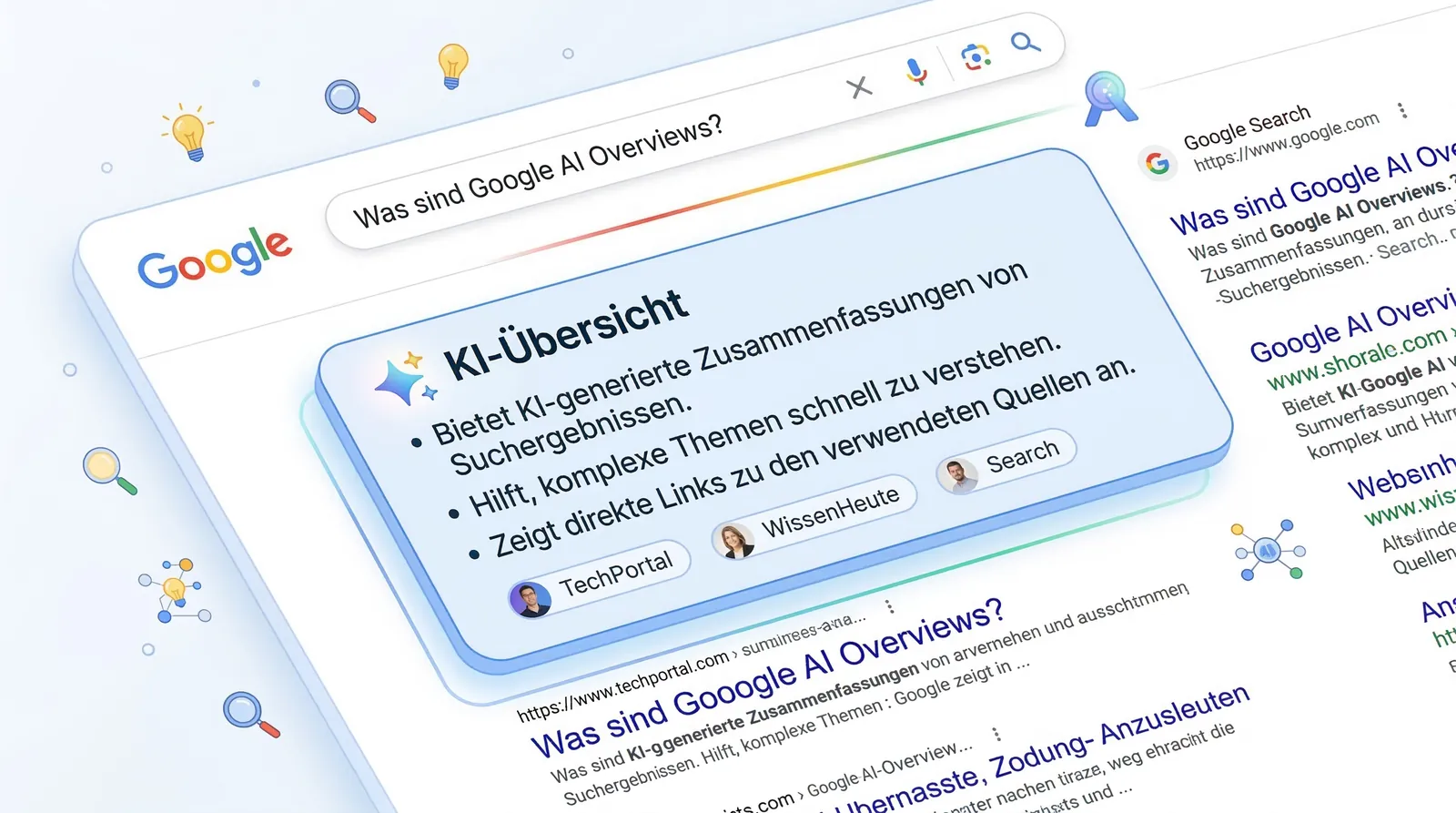
First: queries like "best hotels in …" trigger a web search in 98% of cases. Price queries do so in 91%. The AI does not improvise here from training knowledge, but reads live data. ChatGPT draws its data primarily from the Bing index, Google AI Overviews from the Google index, Perplexity in real time. A cleanly built FAQ page serves all four major AI assistants from a single source.
Second: in the Google AI Mode evaluation, 46.6% of all source citations came from OTA content — Booking, Expedia, Hotels.com, Agoda. But only 3.6% of clicks went to these OTAs. So the model reads OTA data to understand your property, but directs the guest to the Google Business Profile (and ideally to your own website). Anyone who fails to offer the AI their own, well-structured data source lets Booking tell their story.
Third: queries in AI Mode are on average about three times longer than classic Google search queries (Google, Q4 2025 Earnings Call). Guests no longer type "hotel Zermatt", but "family-friendly 4-star hotel in Zermatt with indoor pool, dog-friendly, within walking distance of the station, for a week during autumn holidays". Your website needs to answer exactly this kind of language.
Christine Malfair, Hotel Marketing Strategist, sums it up: "If you don't structure your content with AI in mind, the OTAs will happily do it for you — and claim your visibility and your bookings for themselves."
Which questions belong in the FAQ — and which don't
This is where the good FAQ pages part ways with the useless ones. What the AI is looking for is not marketing phrases, but "the exact sentences guests type when they let ChatGPT plan their trip" (Prostay 2026). In concrete terms: questions that get answered twenty times a day at the front office. Questions from the Google Business Profile Q&A. Questions from your website's internal search logs.
Example questions that work in practice:
- "How do I get from Zurich Airport to your hotel?"
- "Is your restaurant also open to outside guests?"
- "Can I check in early on a Friday in August?"
- "Which hiking trail starts directly at the hotel?"
- "Do you have parking, and is it extra?"
- "What half-board options are available in February?"
- "Are dogs allowed in the hotel, and is there a surcharge?"
- "How far is it to the nearest mountain railway base station?"
- "Do you offer a conference package for 25 people with overnight stay?"
What definitely does not belong there: "A world-class refuge with unparalleled luxury experiences." The industry blog Bored Hotelier puts it in a sentence that has since become something of a maxim: "A 200-room business hotel two minutes' walk from DIFC, with rooftop pool, 24-hour gym and a direct booking rate that beats every OTA — that gets recommended. 'A world-class destination with unparalleled luxury experiences' does not."
Craig Carbonniere, Senior Marketing Strategist at Milestone Inc., puts it even more clearly with regard to MICE enquiries: "My number one recommendation is a deep, detailed FAQ page for meetings & events. Nothing superficial. I mean the questions planners are typing into these tools right now."
The format rules: 60 to 90 words, concrete, dated
The available studies yield a remarkably clear recipe:
- 30 to 50 question-and-answer pairs in total, spread across the website (Prostay 2026); 5 to 8 questions per topical subpage (ailabsaudit 2026)
- 60 to 90 words per answer, self-contained and readable without needing to reread the question
- Concrete figures, distances, prices, times — "7 minutes' walk to the station", not "in the immediate vicinity"
- Dated statements wherever possible ("as of November 2026")
- Updated every quarter, because guests' language keeps shifting
- No keyword stuffing in the answers — the KDD study found this to have a negative effect
A note on schema markup: FAQPage JSON-LD is contested. An Ahrefs analysis (May 2026, 1'885 pages) found no measurable effect on AI Overviews; Google's own AI Optimization Guide states that structured data is not strictly necessary. At the same time, Beyondbooking, Surfeo and RevPARGenius describe schema as "table stakes" for clean SEO.
Our practical recommendation: implement schema, but don't expect it alone to deliver visibility. The visible text does most of the work. Incidentally, Google discontinued the FAQ rich result in search results on 7 May 2026 — but the FAQ content itself remains just as valuable for AI citations as before.
What happens if you do nothing
Booking.com and Expedia have been directly integrated since the launch of the ChatGPT App Directory. Anyone without their own, cleanly structured presence in the AI ecosystem gets represented by these platforms instead — with descriptions you didn't write yourself, from sources you cannot update.
Prostay names this the real joke of the situation: "The OTA pays to host the content that trains the model that recommends the hotel that gets booked directly." In other words: without your own FAQ page, you pay the OTA a commission just for the AI to know your hotel exists at all.
The economic downside is real. Citing TravelBoom Marketing, Surfeo puts the direct-booking lift from GEO optimisation at up to 22%. Beyondbooking points to a conversion rate up to 4.4 times higher for AI-referral traffic compared with classic organic search. Carbonniere of Milestone reports, based on 3'500 hotel websites he manages, that 20 to 30% of all incoming group enquiries now originate from AI tools — a share that is rising sharply; he expects that in the long run nearly 50% of hotel website traffic will arrive via AI engines.
One point worth bearing in mind when assessing this: some of these growth figures come from vendor sources and cannot yet be independently verified. Prostay itself points out that "audited data does not yet yield clean share-of-search figures". What is undisputed is the direction. And the fact that a FAQ page, with low effort and no ongoing cost, represents the single biggest lever within GEO.
What we see in practice at Tourismusconsult
As part of our Digital-Abo and our GEO mandates, we review a clearly defined block for every new client: which real guest questions come in at reception? Which questions appear in the Google Business Profile Q&A? What do users type into the internal search? These sources do not produce an SEO fantasy FAQ, but a list that holds up to industry reality — and that is exactly what the AI is looking for.
From this we build 30 to 50 question-and-answer pairs, organised by topic (arrival, rooms, dining, wellness, meetings, region), each answer in 60 to 90 words, with concrete distances, opening hours and prices. We mirror the content into the Google Business Profile, check consistency across the most important OTA and review profiles — AI models cross-check multiple sources and become cautious as soon as information contradicts itself — and then specifically test visibility in ChatGPT, Perplexity, Gemini and Google AI Overviews using the target audience's actual search phrases.
One open question we cannot answer here: there is as yet no published study specifically for DACH hotels measuring how quickly a new FAQ page appears in AI answers, and no robust data on the share of Swiss hotel websites with AI-ready FAQs. From our mandates we typically see initial effects after 4 to 8 weeks, once the AI indices have processed the new content — a figure we transparently label as experience-based, not as a study result.
What you can do this week
Three concrete steps that any general manager or marketing manager can start without agency help:
1. Systematically collect, for one week, all the questions that are actually asked at reception, by phone and by email. 50 questions are enough.
2. Answer each of these questions in 60 to 90 words, with concrete figures, distances, times. No platitudes, no superlatives.
3. Publish this FAQ on its own, well internally linked page and mirror the most important questions into the Google Business Profile.
If you would like to know how visible your property currently is in ChatGPT, Perplexity and Google AI Overviews — and which questions your FAQ should specifically include — we check this in a free 30-minute initial consultation and show you what your competitors on the next mountain peak are currently doing better in AI answers.
More articles on this topic
- How visible is your hotel really (GEO fundamentals)
- Why ChatGPT recommends your hotel – FAQ page (example of a cluster building block)
- PR as a GEO lever (another GEO factor)
- Local SEO for tourism regions (application example for destinations)