Why this topic matters now
Travellers have become more demanding. They expect hotels to know their needs — even before they arrive. Anyone communicating a generic message to everyone loses. Anyone speaking directly to a specific audience wins. Buyer personas are the tool that makes the difference.
The problem in everyday hotel operations
Many hoteliers have a rough idea of who their guests are. But "roughly" is no longer enough. The website speaks to everyone and convinces no one. Social media posts get little response. Offers are barely booked. The reason is often the same: there is no clear picture of who the ideal guest is, what drives them and what moves them to book.
What current data shows
The SiteMinder Changing Traveller Report 2026 — the world's largest consumer study on accommodation preferences with nearly 12'000 respondents from 14 countries — delivers clear signals:
- OTAs have overtaken search engines. In 2026, travellers start their hotel search on booking platforms more often than on Google. Anyone not visible there, or without a compelling profile, simply won't be found.
- Word of mouth is making a comeback. Personal recommendations have doubled to 14 %. This shows that guests trust people, not algorithms.
- 58 % book superior or luxury rooms — an increase of 4 percentage points compared to the previous year. Those who know their guests can specifically offer higher-value categories.
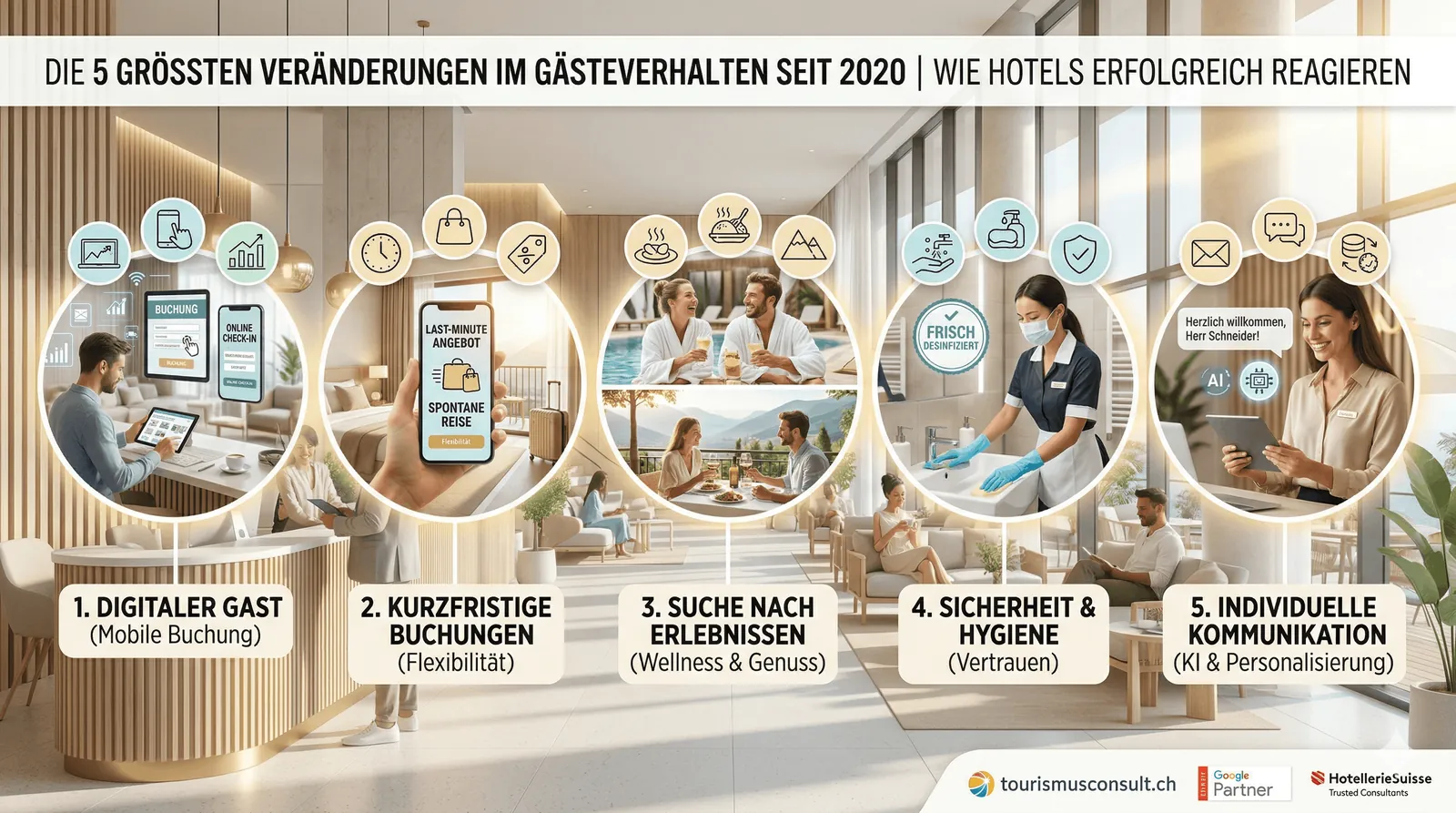
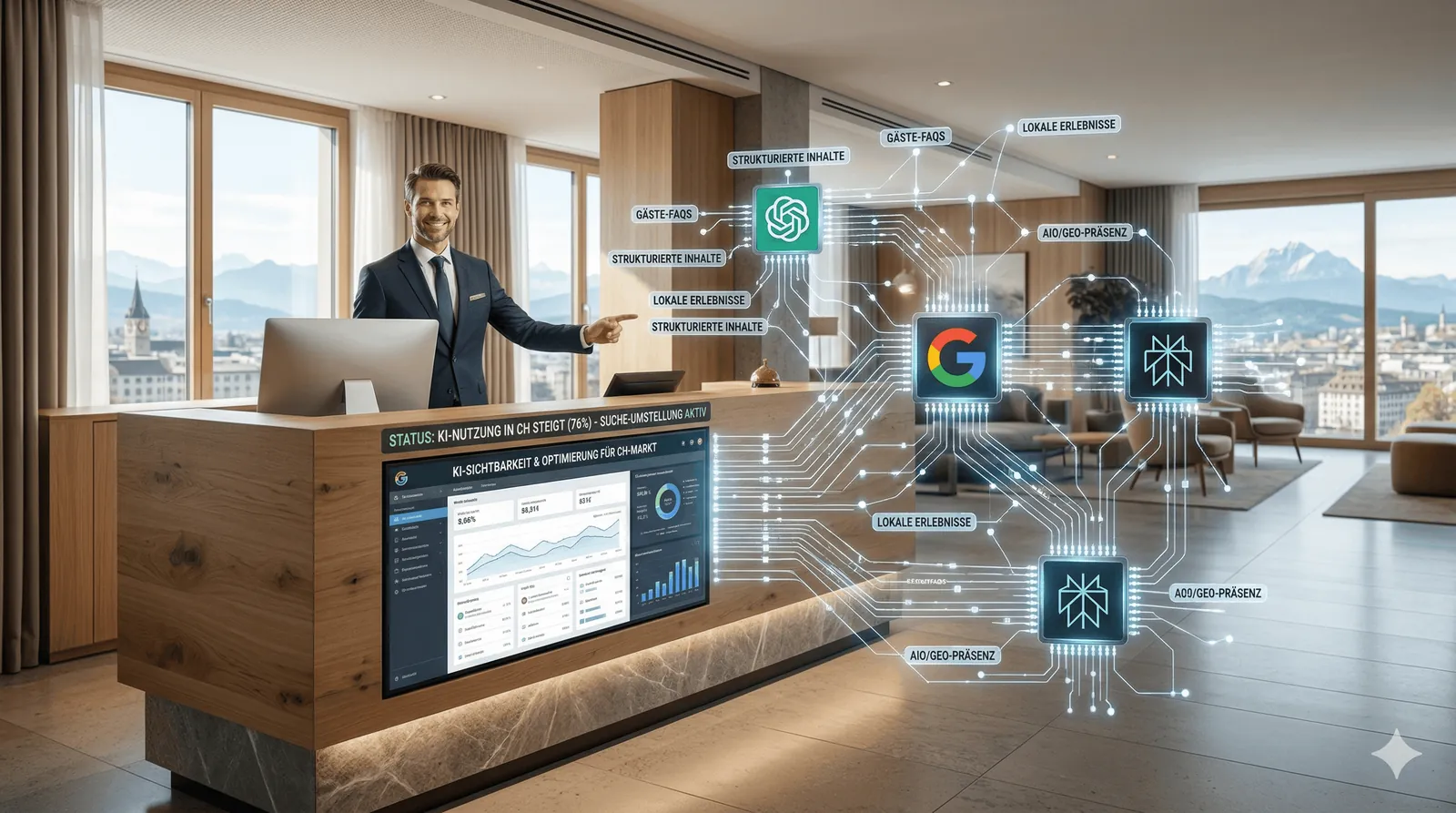
- 80 % of travellers expect AI support when booking. Personalisation is no longer optional — it is essential.
- Guests are looking for substance instead of excess. According to an analysis by Online Birds for the DACH region, travellers in 2026 want calm, authenticity and clear hotel profiles — not empty promises.
- 73 % of travellers expect brands to understand their individual needs (Salesforce). And 72 % stay loyal to brands that personalise their communication.
The message is clear: those who don't know their guests can't address them. And those who can't address them lose them to the competition.
What does this mean for your hotel?
1. General messages no longer work.
"Welcome to our hotel" interests no one. What interests people is: "Here you'll find the calm you're looking for" — if that's exactly what your persona needs. Those who know their target audience write better copy, create better offers and run better advertising.
2. Personas help you set priorities.
Should you be active on Instagram or invest in Google Ads instead? That depends on where your guests are. A persona gives you this answer — without guesswork.
3. Direct bookings increase when the message is right.
If your website speaks exactly the language your guests understand, they book there — not on Booking.com. This saves on commission and strengthens customer loyalty.
What is a buyer persona?
A buyer persona is a fictional but realistic profile of your ideal guest. It has a name, an age, wishes, habits and challenges. Instead of talking about "the guest", you talk, for example, about "Anna, 38, yoga teacher from Zurich, who wants to switch off with her partner on the weekend and wishes for a quiet mountain hotel with good food". This makes your target audience tangible — and your marketing concrete.
How to create a persona — with the help of AI
The good news: you don't need a market research agency for this. With AI tools like ChatGPT, it's faster and easier than you might think.
Step 1: Gather what you already know.
Booking data, Google reviews, conversations at reception — all of this is a valuable source. Age, origin, length of stay, booking time, common requests: note it all down.
Step 2: Enter this information into an AI tool.
A good prompt (this is the instruction you give the AI) could look like this:
"Create a buyer persona for our 4-star wellness hotel in the Swiss Alps. Our guests mostly come from German-speaking Switzerland, are between 30 and 45 years old, and travel as a couple for 2–3 nights over the weekend. They are interested in hiking, good food and relaxation. Create a detailed persona with name, age, occupation, goals, challenges and how our hotel can help her."
Step 3: Refine the result.
The AI delivers an initial draft. Review it critically: does it match your experience? Add what's missing. For example: "Which social media channels does this persona use?" or "How does she typically book — spontaneously or well in advance?"
Common mistakes — and how to avoid them
1. The persona stays in the drawer.
A persona is useless if it's forgotten after being created. Display it visibly, share it with your team and use it for every marketing decision.
2. Too many personas at once.
Creating five personas causes you to lose focus. Start with one or two — and get them right.
3. The persona is based on wishful thinking rather than data.
A persona you wish for doesn't help. A persona based on real booking data and guest feedback does. Be honest with yourself.
Conclusion
Guests today no longer want to be addressed like everyone else. They want to feel that a hotel is made exactly for them. Buyer personas help you create this feeling — not by chance, but through strategy.
The good news: you don't need to be a marketing professional to get started. An afternoon, your booking data and an AI tool are enough for an initial, effective draft. Those who know their guests communicate better, invest more precisely and secure more direct bookings.
If you would like support with this — creating your personas, revising your website or developing targeted campaigns — we at Tourismusconsult are happy to help.
Sources
- SiteMinder: Changing Traveller Report 2026 — the world's largest consumer study on accommodation preferences, 12'000 respondents from 14 countries. siteminder.com
- Salesforce: State of the Connected Customer — study on travellers' personalisation expectations. salesforce.com
- Online Birds / Tageskarte.io: Hotel Trends 2026: Guests Are Looking for Substance, Calm and Clear Profiles (2026). tageskarte.io
- Revfine.com: Hospitality Marketing: 19 Trends You Should Know in 2026. revfine.com
More related articles:
- Buyer Personas for Hotels: Step-by-Step Guide with AI Prompts (practical guide — cross-link)
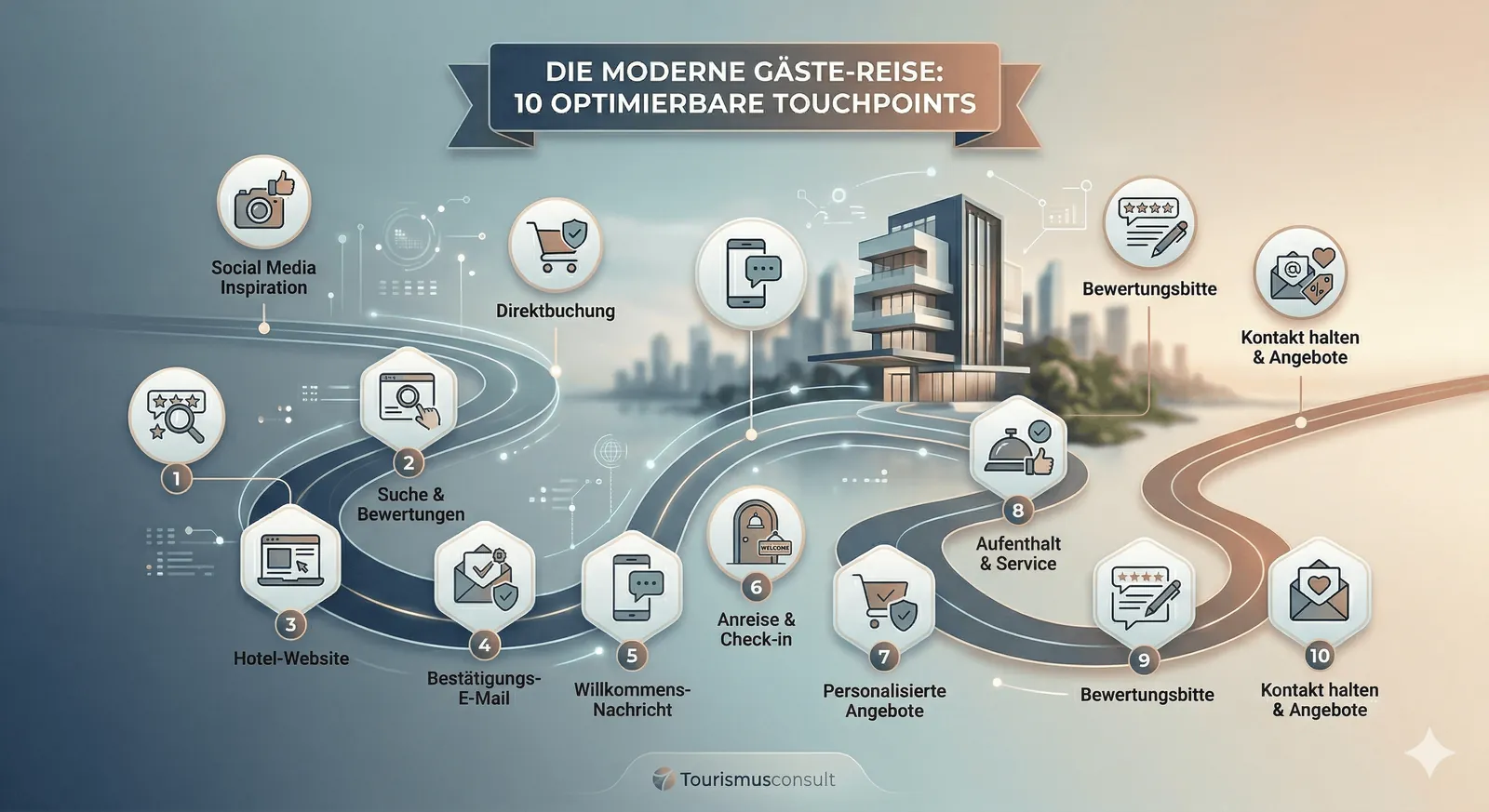
- The Modern Hotel Customer Journey (use case)
- Hyper-Personalisation 2.0 (using persona data)