Imagine your potential guest no longer searches Google for their next weekend trip, but instead asks an AI chatbot directly for the perfect hotel recommendation. What sounded like science fiction not long ago has long since become reality in Switzerland.
A current representative survey by the comparison service Comparis (April 2026) delivers impressive figures: within just two years, the use of AI tools in Switzerland has risen massively.
For hoteliers, this means that your guests' search and booking behaviour is changing at record speed. Anyone who ignores this development loses visibility.
The key findings on AI use in Switzerland
The figures speak a clear language and show that AI has made the leap from hype to everyday life:
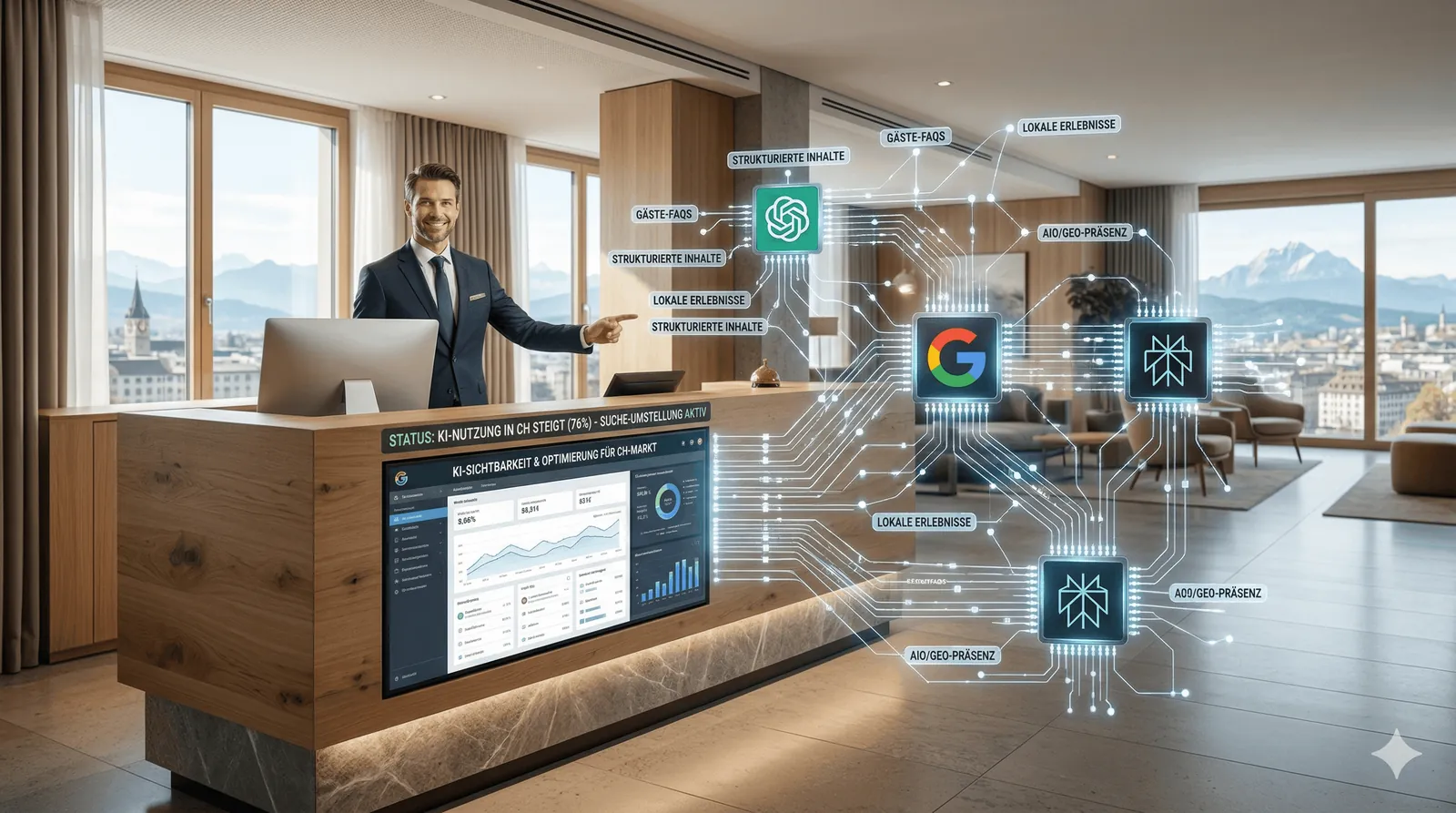
- Rapid growth: 76 percent of the Swiss population now use AI tools such as ChatGPT, Gemini or Perplexity. Two years ago (2024), it was only every second person.
- The new Google search: Particularly interesting for marketing: 41.6 percent of users now use chatbots instead of a classic search engine such as Google.
- Regional and demographic differences: In French-speaking Switzerland, usage is particularly high at over 81 percent (German-speaking Switzerland: 74%). Unsurprisingly, 18- to 35-year-olds are the most intensive users, at over 90%. Usage is also above average among people with an income over 8000 francs (86%).
- High expectations of precision: Almost two thirds of respondents expect more precise answers from a chatbot than from a human. For standard questions (such as product information), over 70% even prefer the bot.
- Clear limits on sensitive data: However, when it comes to intimate or personal information (such as health data), distrust remains high. More than half of users refuse to share such data with an AI.
3 conclusions for your hotel marketing
What do these figures mean specifically for marketing your hotel? Here are three key conclusions for your strategy:
1. Optimise for AI answer engines (AIO/GEO)
If over 40 percent of users type their questions directly into ChatGPT instead of Google, classic search engine optimisation (SEO) is no longer enough. You need to make your hotel fit for so-called AI Overviews and Generative Engine Optimization. AI bots draw their information from well-structured, clear and in-depth content. Make sure your website answers your guests' most frequent questions ("What excursion destinations are there around the hotel?", "What are the parking options?") precisely and in detail.
2. Use chatbots for standard enquiries — but with a sense of nuance
The survey shows that guests have no problem with bots when it comes to simple, process-oriented enquiries. A well-trained AI chatbot on your website can perfectly handle questions about check-in times, room amenities or breakfast times, and take the load off your reception team. Since users expect extremely high precision here, the bot must be fed error-free with the correct hotel data. However, as soon as it comes to emotional concerns, complaints or highly individual wishes, a human must take over immediately.
3. Adapt your marketing to the "power users"
The data clearly shows who the most intensive AI users are: young adults (18-35 years), high earners and guests from French-speaking Switzerland. If these groups belong to your target audience (for example for weekend trips, boutique hotels or upscale dining), you need to be present where these guests search. This also means that your offers must be findable and attractively presented on platforms that rely heavily on AI recommendations.
Conclusion: the search for your hotel has changed
The times when a simple website and a good Google ranking were enough to attract guests are over. AI chatbots are increasingly taking on the role of the digital travel agency. Hoteliers who now structure their content and prepare it in an AI-friendly way have the best chances of continuing to be recommended by guests' digital assistants in the future.
More related articles
- How visible is your hotel really (logical follow-up: what this means for visibility)
- ChatGPT loses market share (update/addition on the market situation)
- Why ChatGPT recommends your hotel — FAQ page (concrete measure)