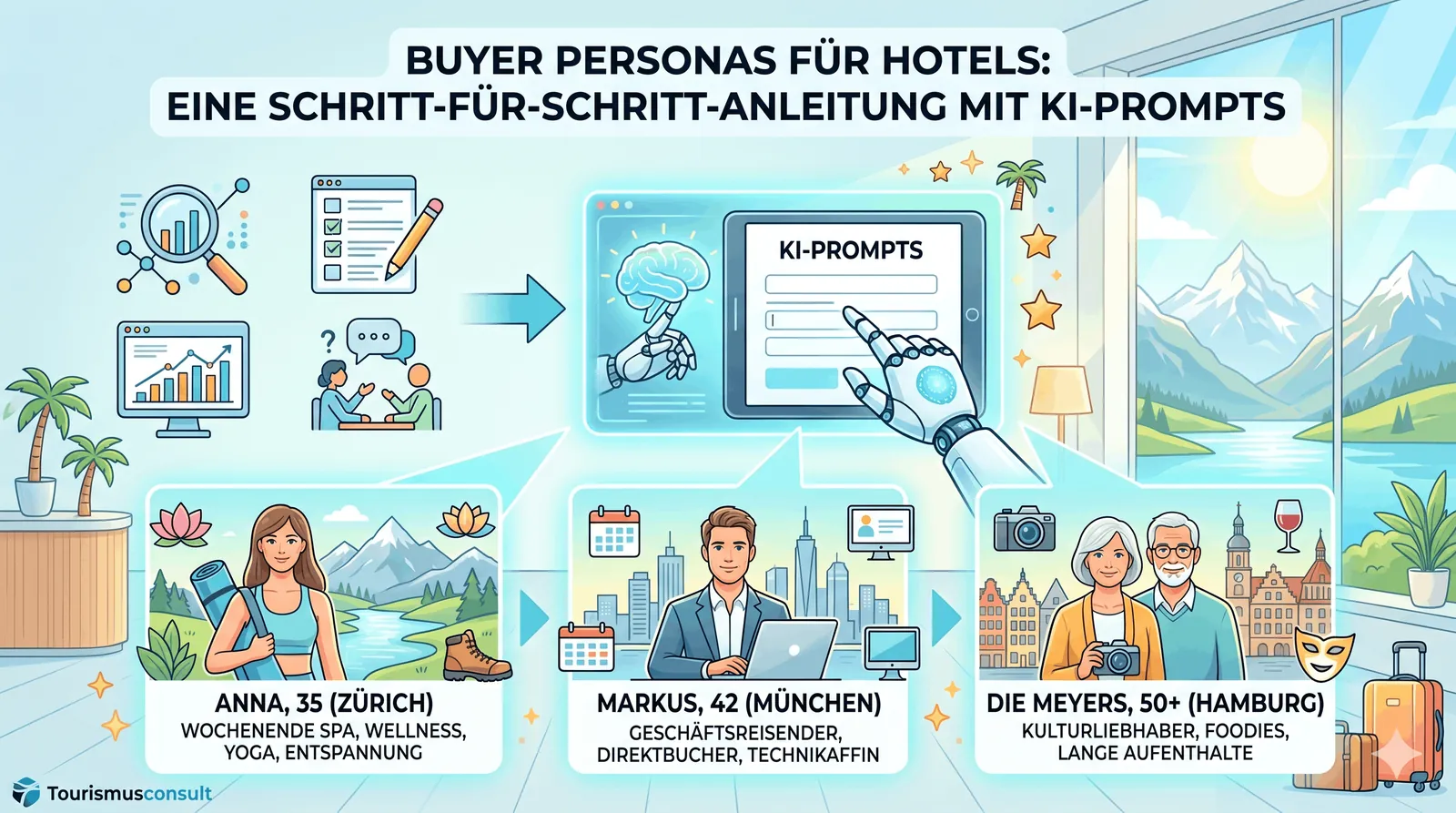
Imagine knowing your ideal guests so well that you know exactly what they want — before they know it themselves. That is exactly what buyer personas make possible. In this article, we show you how to create clear guest profiles for your hotel with simple means and some help from artificial intelligence (AI).
What is a buyer persona?
A buyer persona is a fictional but data-based representation of your ideal guest. It has a name, a face, goals, wishes and challenges. Instead of talking about "the guest", you talk, for example, about "Anna, the 35-year-old yoga teacher from Zurich, who wants to relax on the weekend". This makes your target group tangible and human.
Why are buyer personas important for my hotel?
When you know your target groups precisely, you can align your marketing and offers far more effectively. The benefits are clear:
- Personalised marketing: Address your guests with the right messages on the right channels.
- Offer development: Create offers that are tailored exactly to the needs of your personas.
- More direct bookings: Targeted communication leads to more bookings through your own website and reduces dependency on booking platforms.
Step-by-step guide to creating a buyer persona with AI
Creating personas does not have to be complicated. With AI tools such as ChatGPT or Gemini, you can simplify the process considerably.
Step 1: gather data
Compile what you already know about your guests. Good sources are:
- Booking data: age, origin, length of stay, booking time.
- Guest feedback: reviews on Google, Booking.com or personal conversations.
- Website analysis: Which pages are visited most often?
- Your team: Ask reception or service staff about their observations.
Step 2: guide the AI assistant (prompting)
Now feed the information you have gathered into an AI tool. A good "prompt" (an instruction to the AI) is the key to success. Formulate clearly what you want.
Example of an AI prompt:
"Create a buyer persona for our 4-star wellness hotel in the Swiss Alps. We have many guests from German-speaking Switzerland, between 30 and 45 years old, who mostly come as couples for 2-3 nights on the weekend. They are interested in hiking, good food and relaxation. Create a detailed persona with name, demographic characteristics, goals, challenges and how our hotel can help them."
Step 3: refine the persona
The AI will provide you with an initial draft. Review it and add your own knowledge. Is the persona realistic? Does it fit your hotel? Give the AI feedback to improve the result, for example: "This is a good start. Please add which social media channels this persona uses."
Conclusion: understand your guests better and address them more precisely
Buyer personas are a simple but effective tool to take your hotel marketing to the next level. They help you recognise individual personalities within the anonymous mass of your guests and tailor your communication and offers precisely to their needs. With the support of AI, this process is easier and faster today than ever before.
If you would like to dive deeper into the world of data-driven hotel marketing, we at Tourismusconsult are happy to support you with our expertise.
Current sources
PhocusWire (2026) / Hospitality.today (2026) on new AI-supported ways to reduce OTA dependency.
Current social media marketing trends 2026 for the hotel industry (e.g. TikTok & Reels focus according to Sprout Social 2026 Index).
Further related articles:
- Do you really know your guests? Why buyer personas will be more important than ever in 2026 (sister article, same topic — be sure to link to each other)
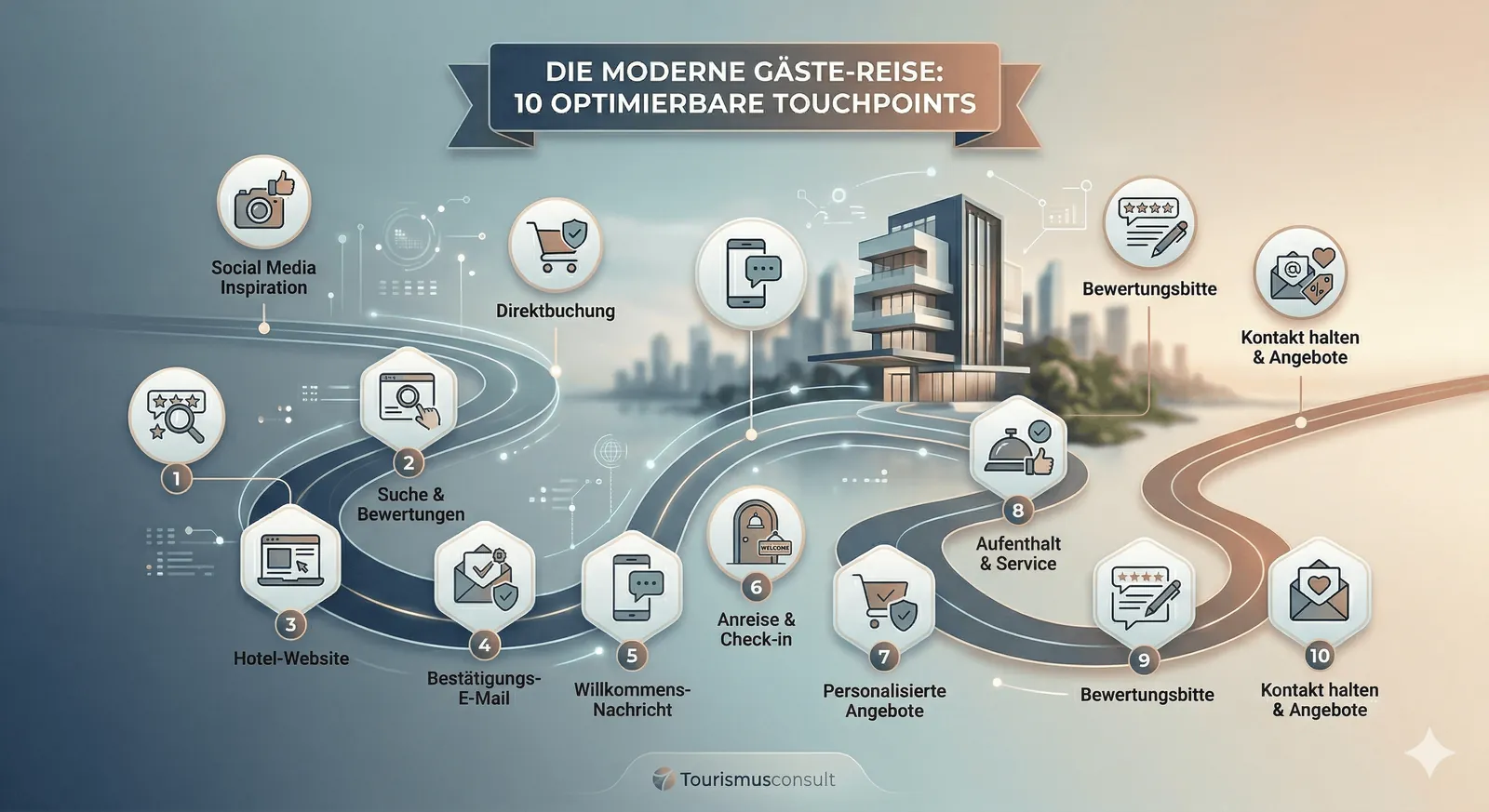
- The modern hotel customer journey (applying personas to touchpoints)
- Hyper-personalisation 2.0 (using personas for a personalised website)